#337 of 500
· Rolling Stone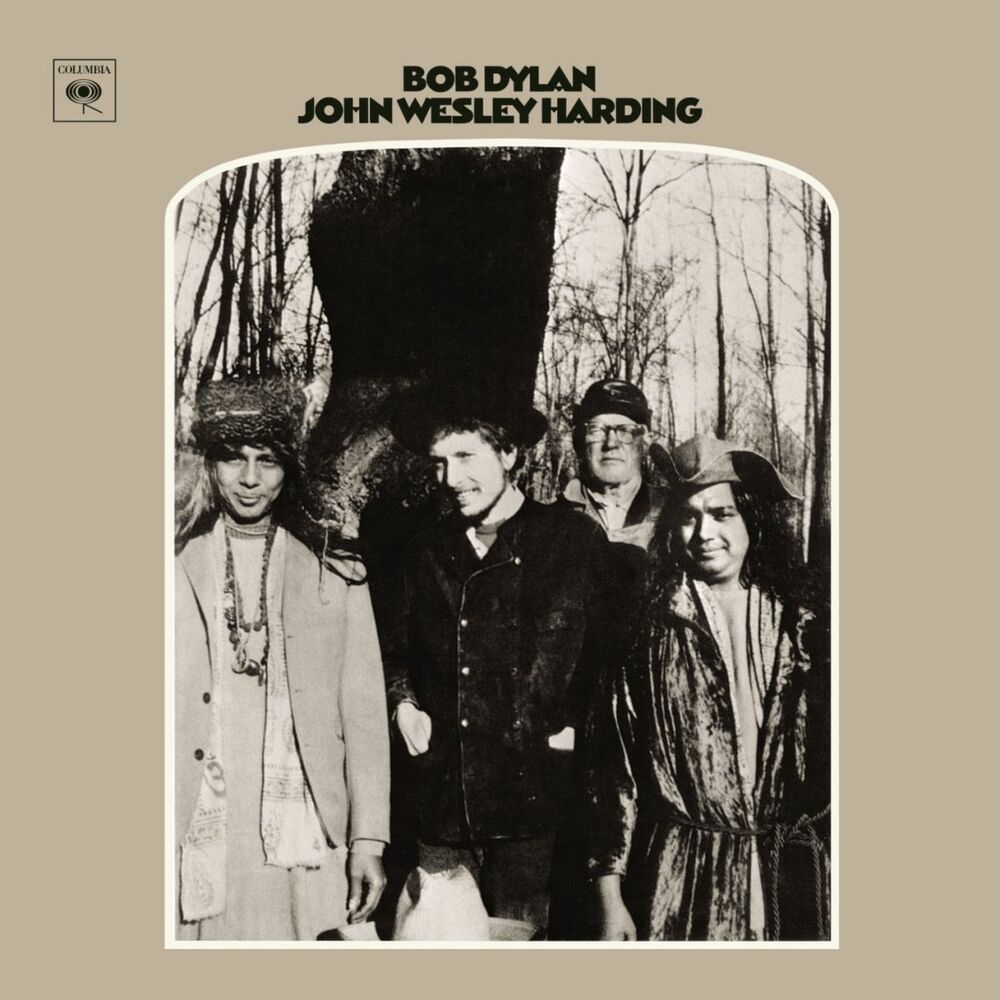
“At #337, John Wesley Harding represents Bob Dylan at a creative peak (1967). The original pressing captures a moment in rock that's been influential ever since. Worth hunting in the bins.”
Bob Dylan emerged from the folk music scene in early 1960s New York, quickly becoming the voice of a generation with his poetic, socially conscious songwriting. His controversial decision to "go electric" at the 1965 Newport Folk Festival marked a watershed moment in rock history, leading to landmark albums like "Highway 61 Revisited" and "Blonde on Blonde." Throughout his career spanning six decades, Dylan has continuously reinvented himself across country, gospel, blues, and experimental rock, earning the Nobel Prize in Literature in 2016. His influence on popular music remains immeasurable, with countless artists citing him as foundational to their artistic development.
Style
Dylan pioneered the singer-songwriter tradition, blending folk music with rock, blues, and country influences. His distinctive nasal vocal delivery, intricate guitar work, and densely layered, often cryptic lyrics became his signature sound across multiple genres.
Significance
Dylan is a cornerstone artist for vinyl collectors, with his early acoustic albums and electric-era works representing some of the most important recordings in rock history. His prolific output and constant artistic experimentation make his discography essential for understanding modern music's evolution, while original pressings of albums like "The Freewheelin' Bob Dylan" and "Blood on the Tracks" remain highly sought-after collector's items.
John Wesley Harding marked Dylan's return to acoustic songwriting after his 1966 motorcycle accident and subsequent retreat from public life. Recorded in just three sessions at Columbia's Studio A in Nashville in November 1967, the album featured only Dylan's voice, acoustic guitar, and sparse instrumentation from Charlie McCoy (harmonica) and Kenny Buttrey (drums). Dylan worked with producer Bob Johnston to craft a deliberately minimalist sound that contrasted sharply with his previous electric explorations. The album's twelve songs showcased Dylan's evolving songwriting—moving away from surrealist imagery toward biblical references and folk narrative traditions. The sparse production allowed the lyrics to take center stage, with tracks like "All Along the Watchtower" and "I'll Be Your Baby Tonight" demonstrating renewed focus on melody and storytelling.
Historical Context
Released in December 1967, John Wesley Harding arrived during a cultural moment of psychedelic excess and experimental rock. Dylan's stripped-down approach stood in deliberate contrast to contemporary releases like The Beatles' Sgt. Pepper's and Jimi Hendrix's Electric Lady Land. The album was immediately hailed as a masterpiece, establishing Dylan as a serious songwriter beyond his protest-song persona. It influenced the emerging country-rock and Americana movements, inspiring artists to explore acoustic simplicity after years of studio experimentation. The album topped charts worldwide and restored Dylan's cultural relevance after a period of relative commercial decline.
Pressing Notes
The original 1967 Columbia pressing (CS 9604 stereo, CL 2804 mono) is highly sought by collectors. Early pressings feature a gatefold jacket with Dylan's woodcut portrait and contain subtle mixing differences—some collectors prefer the slightly warmer sound of original pressings. The album was reissued multiple times throughout the 1970s-80s with varying jacket designs and audio mastering. The 1997 Columbia remaster on 180-gram vinyl is generally regarded as an excellent representation of the original recording. Be aware of counterfeit pressings from unauthorized sources, particularly from the 1970s. Early stereo copies command premium prices; original mono pressings are rarer but generally less sought after than stereo versions.

Harvest
Neil Young
Shares the introspective, acoustic-driven folk-rock sensibility with Dylan's stripped-down approach to songwriting and arrangement.

Blue
Joni Mitchell
Features similarly intimate, poetic lyrics and sparse instrumentation that emphasizes vulnerability and emotional depth like Dylan's introspective work.

Astral Weeks
Van Morrison
Demonstrates the same 1960s folk-influenced songwriting with jazz-tinged arrangements and philosophical lyrical content that defined Dylan's era.

Music from Big Pink
The Band
Created during the same period and influenced by Dylan's country-folk direction, featuring rustic harmonies and narrative-driven songwriting.

Songs of Leonard Cohen
Leonard Cohen
Offers the same contemplative, literary approach to folk-rock songwriting with minimal arrangements that prioritize lyrical poetry and emotional resonance.
Own this record? Track it in your collection.