#21 of 100
· Cratewise Editorial
“A Love Supreme sits here because it's the spiritual anchor every serious collector needs on their shelf. Coltrane's four-part suite is transcendent—that first needle drop on "Acknowledgement" still hits like a revelation—but I'm ranking it at 21 rather than higher because its perfection can sometimes overshadow deeper Coltrane cuts that demand more from the listener. The original Impulse! pressing has a warmth that later reissues chase but never quite capture. This is essential wax, full stop, but it's also the gateway; the real journey into Coltrane's genius happens when you move beyond this masterpiece into the cosmos of Interstellar Space or Meditations.”
John Coltrane (1926-1967) was an American jazz saxophonist and composer who revolutionized modern jazz through his innovative harmonic concepts and spiritual intensity. Rising to prominence in the 1950s as a member of Miles Davis's first great quintet, Coltrane established himself as a bandleader with his seminal albums 'Giant Steps' (1960) and 'A Love Supreme' (1964), the latter becoming one of the best-selling jazz albums of all time. His later work, particularly the experimental 'Ascension' (1966) and 'Expression' (1967), pushed jazz into avant-garde territory with sheets of sound and modal explorations. Coltrane's career spanned a remarkable evolution from bebop and hard bop to free jazz, influencing virtually every saxophonist who followed.
Style
Coltrane pioneered the 'sheets of sound' technique—rapid, overlapping arpeggios creating a dense, nearly orchestral effect on the saxophone. His style encompassed hard bop, modal jazz, and free jazz, characterized by spiritual intensity, harmonic complexity, and technically virtuosic performances.
Significance
Coltrane is considered one of the most important jazz musicians ever, with his albums forming the foundation of any serious jazz vinyl collection. 'A Love Supreme' and 'Giant Steps' remain essential and highly sought-after records, while his spiritual and experimental work continues to inspire collectors exploring jazz's artistic boundaries.
A Love Supreme, recorded over two days in December 1964, stands as John Coltrane's spiritual masterpiece and commercial breakthrough. The saxophonist led a quartet featuring pianist McCoy Tyner, bassist Jimmy Garrison, and drummer Elvin Jones through four movements that Coltrane conceived as a suite dedicated to spiritual awakening. The album emerged during Coltrane's deep exploration of modal jazz and his personal spiritual journey. He had been attending the African Orthodox Church and inscribed the album's liner notes with a handwritten prayer, making explicit the religious intention behind the music. The recording sessions were notably focused and efficient; Coltrane's vision was clear, and the quartet executed his ambitious concept with remarkable cohesion. The album's success surprised even Coltrane's label, Atlantic Records, becoming his first gold-selling record and introducing modal jazz to a mainstream audience.
Historical Context
Released in February 1965, A Love Supreme arrived during the Civil Rights Movement and at the height of the 1960s spiritual awakening in American culture. The album resonated with listeners seeking deeper meaning beyond commercial pop music, aligning with broader countercultural interests in spirituality and Eastern philosophy. It received immediate critical acclaim and unprecedented commercial success for avant-garde jazz, reaching the Billboard Top 20 and establishing Coltrane as both an innovative artist and cultural figure. The album's influence extended across genres, inspiring musicians in rock, soul, and hip-hop. A Love Supreme became the best-selling jazz album of all time and cemented Coltrane's legacy before his death in 1967.
Pressing Notes
The original 1965 Atlantic Records pressing (SD 8122) is highly sought by collectors, with early mono and stereo variations. The gatefold cover, featuring Coltrane's handwritten spiritual text, remains iconic. Stereo pressings are generally preferred and more common than mono versions. Mobile Fidelity Sound Lab released an audiophile remaster in 1995 that collectors praise for improved sound quality. In 2002, Impulse! Records (which had acquired Atlantic's jazz catalog) released a deluxe 2-CD reissue with alternate takes and previously unreleased material. Modern vinyl reissues remain readily available, though original 1960s pressings command premium prices. Collectors should note that the album's spiritual text and original gatefold presentation are important to the complete experience.
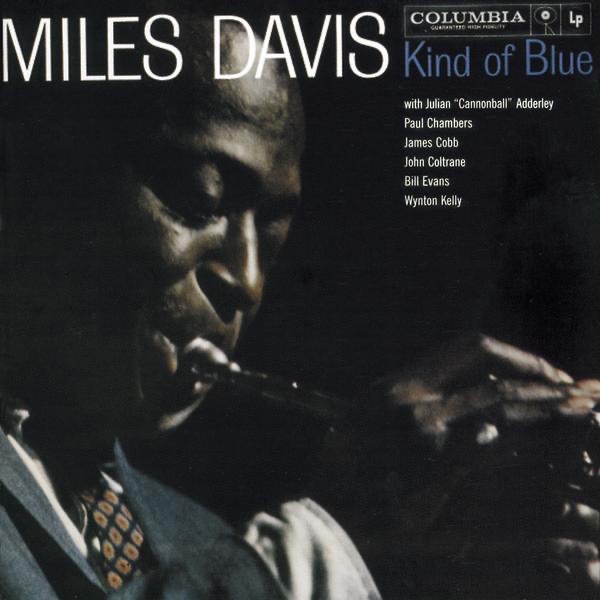
Kind of Blue
Miles Davis
A modal jazz masterpiece that shares Coltrane's spiritual depth and features similarly thoughtful improvisation across timeless compositions.

Karma
Pharoah Sanders
Sanders was directly influenced by Coltrane's spiritual jazz direction and delivers cosmic, meditative saxophone work with powerful emotional resonance.

Journey in Satchidananda
Alice Coltrane
A haunting exploration of spiritual jazz that extends John Coltrane's legacy through harp and orchestral arrangements with similar devotional intensity.
Also Appears On
Essential Jazz on Vinyl
“A four-part spiritual suite recorded in one session. The most intense, devotional music in the jazz canon. Side A alone will change how you listen to everything.”
Rolling Stone's 500 Greatest Albums of All Time
“Coltrane's spiritual masterpiece — four movements of devotional jazz that changed the possibilities of the form. The Impulse! pressing with the orange-and-black label is the definitive version. 'Acknowledgement' builds from a bass line mantra into transcendence. This is jazz at its most sacred.”
Apple Music 100 Best Albums
“A Love Supreme at 54 feels criminally underrated for one of jazz's most transformative albums. Coltrane's spiritual awakening translated into four-part suite perfection—the title track alone redefined what a saxophone could express. The Impulse! pressing captures every nuance of those sessions, from McCoy Tyner's harmonic depth to Elvin Jones's revolutionary timekeeping. This belongs somewhere in the top 20 of any serious music list, regardless of genre.”
Own this record? Track it in your collection.