#1 of 25
· Cratewise Editorial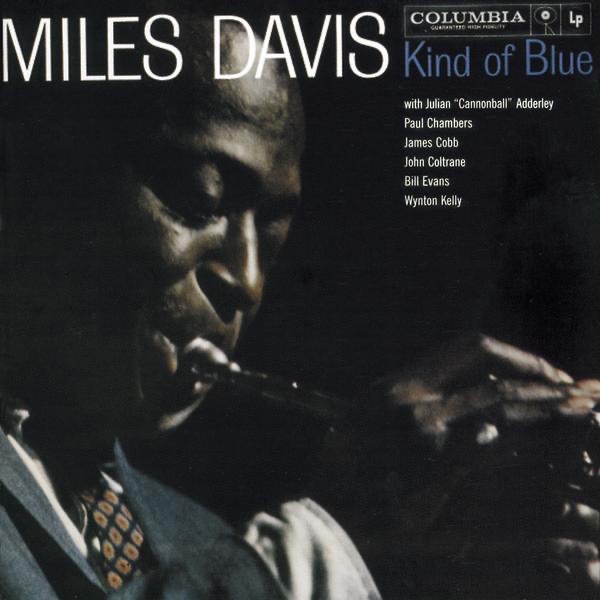
“The entry point for everyone. Modal jazz played by the greatest lineup ever assembled, mostly in first takes. If you own one jazz record, this is it.”
Miles Dewey Davis III (1926–1991) was an American jazz trumpeter and composer who fundamentally shaped modern jazz across five decades. Born in Alton, Illinois, he moved to New York in 1944 and quickly became a central figure in bebop before pioneering cool jazz in the late 1940s with collaborations like the "Birth of the Cool" sessions. Davis's career encompassed multiple revolutionary phases: modal jazz with "Kind of Blue" (1959), the Second Great Quintet's avant-garde explorations, and his groundbreaking fusion work beginning with "In a Silent Way" (1969) and "Bitches Brew" (1970). He collaborated with some of jazz's greatest musicians, including John Coltrane, Cannonball Adderley, Bill Evans, Wynton Kelly, and Weather Report members. His later work increasingly embraced electric instruments and rock influences, keeping him artistically vital until his death.
Style
Miles Davis's style evolved from bebop trumpet virtuosity to pioneering cool jazz, modal improvisation, and eventually electric fusion. His tone was distinctive—introspective and economical rather than virtuosic—and his ability to assemble visionary ensembles produced some of jazz's most influential recordings.
Significance
Miles Davis is among the most collected and essential jazz artists in the vinyl format, with multiple landmark albums considered foundational to any serious jazz collection. His frequent reissues and original pressings remain highly sought after by collectors for both sonic quality and historical importance.
Kind of Blue was recorded over two sessions in 1959, with Miles Davis assembling an all-star lineup featuring John Coltrane, Cannonball Adderley, Bill Evans, Wynton Kelly, and Jimmy Cobb. The album marked Davis's embrace of modal jazz, a departure from the bebop and hard-bop conventions of the era. Rather than complex chord changes, Davis and his collaborators explored improvisation within modal frameworks, allowing for greater harmonic freedom. Evans contributed the piano arrangements and compositions for several tracks, while the band worked with minimal rehearsal, capturing a spontaneous yet cohesive sound. The recording sessions were notably efficient, with most tracks completed in single takes, reflecting the musicians' deep understanding of Davis's artistic vision.
Historical Context
Released in 1959, Kind of Blue arrived at a pivotal moment in jazz history, influencing the genre's trajectory for decades. The album represented jazz moving away from the frenetic complexities of bebop toward introspective, spacious arrangements. It coincided with growing interest in world music and non-Western scales in Western composition. The album was immediately acclaimed by critics and gradually became one of the best-selling jazz albums of all time. Its success helped legitimize modal jazz as a serious compositional approach and established Davis as jazz's leading innovator.
Pressing Notes
Kind of Blue was originally released on Columbia Records and has been pressed countless times across multiple formats and editions. Early first pressings from 1959-1960 are highly sought by collectors, particularly mono versions and early stereo releases with the original gatefold jacket. The album has been reissued numerous times, including 180-gram audiophile pressings and Japanese pressings known for superior quality control. Collectors should note differences in mastering across editions; the 1997 remaster and various 2000s Legacy pressings differ in sound character. For the best sonic experience, original Columbia six-eye mono pressings are considered reference editions, though later 180-gram reissues offer convenience and modern pressing consistency.

A Love Supreme
John Coltrane
This modal jazz masterpiece shares Kind of Blue's contemplative spirituality and features similar harmonic exploration with a legendary saxophonist.

Somethin' Else
Cannonball Adderley
Featuring Miles Davis and recorded during the same era, this album shares Kind of Blue's warm tone and accessible modal approach to hard bop.
Also Appears On
Rolling Stone's 500 Greatest Albums of All Time
“The best-selling jazz album of all time, and it earned the distinction. Miles assembled a sextet — Coltrane, Cannonball, Bill Evans — and they played these compositions mostly in first takes. The Columbia six-eye pressing is an audiophile reference point. Every system sounds better playing this record.”
Sounds Better on Wax
“The room sound at Columbia's 30th Street Studio — a converted church — is half the album. On vinyl, you hear the space. On digital, you hear the notes. Big difference.”
Dexx's Top 100 Vinyl Albums of All Time
“Kind of Blue sits at #7 because it's the blueprint that made modal jazz accessible without sacrificing sophistication. Every needle drop reveals something new—whether it's Coltrane's sheets of sound on "Sheets of Sound" or the way Wynton Kelly's piano locks into that hypnotic groove on "Freddie Freeloader." The original Columbia pressing is a desert island record for collectors, and Cannonball Adderley's alto sax makes the case that you don't need bebop complexity to achieve perfection. This album teaches you how to listen.”
Apple Music 100 Best Albums
“This is the obvious choice, but rightfully so—Kind of Blue is jazz's best-selling album for a reason. The modal approach Davis and Gil Evans pioneered here became the template for modal jazz, and every needle drop still feels revelatory nearly seventy years later. At number 25, it's telling that even on a list of 100 essentials, Kind of Blue can't crack the top quarter; that's not a slight, just proof of how stacked jazz's legacy really is. The first pressing captures something pristine that later reissues struggle to match.”
Own this record? Track it in your collection.