#20 of 100
· Cratewise Editorial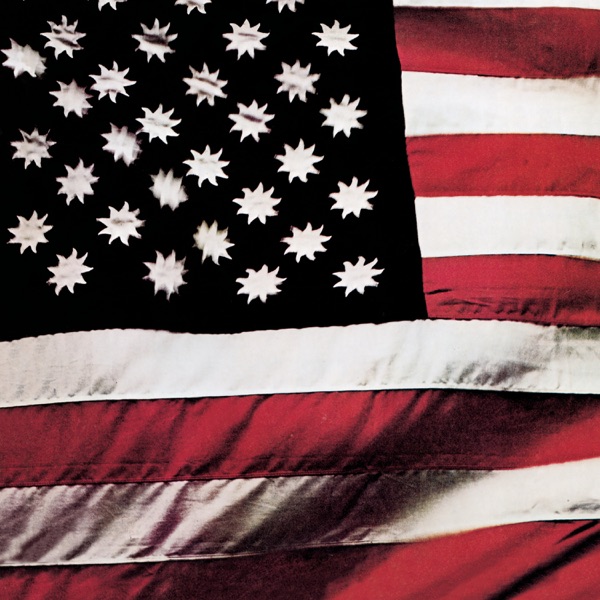
There's a Riot Goin' On
Sly and the Family Stone
Year
1971
Genre
FunkLabel
Epic
Format
Vinyl LP
“There's a Riot Goin' On sits right here at twenty because it's the album that broke the soul playbook entirely. Sly pulled back from the infectious joy of "Stand!" and gave us something darker, funkier, and endlessly replayable—those synth strings on "Family Affair" still hit different on the first needle drop. It's a landmark that influenced everything from P-funk to '90s hip-hop, and the original Epic pressing captures that murky, intentional production that studio perfectionist Sly obsessed over. Essential wax that proves a classic isn't just about immediate hooks; it's about architectural shift.”
Sly and the Family Stone, led by Sylvester Stewart, emerged from the San Francisco Bay Area in the late 1960s as pioneers of funk and psychedelic soul. The group's innovative sound blended rock, soul, gospel, and funk into a revolutionary sonic tapestry that defined an era. Their landmark albums "There's a Riot Goin' On" (1971) and "Fresh" (1973) remain cornerstones of funk music, showcasing Sly's production genius and the band's tight ensemble playing. Despite commercial decline in the late 1970s and personal struggles, their influence on funk, hip-hop, and popular music remains incalculable, with countless producers and artists sampling and referencing their work.
Style
Sly and the Family Stone pioneered funk and psychedelic soul, characterized by infectious grooves, call-and-response vocals, integrated instrumentation across horns and keyboards, and socially conscious lyrics. Their sound seamlessly merged rock instrumentation with funky rhythms and soulful vocals.
Significance
The group's innovative production techniques, particularly evident on "There's a Riot Goin' On," established new standards for funk recording and remain essential references for vinyl collectors and music producers. Their multicultural, gender-integrated band lineup was groundbreaking for the era and their records are foundational to understanding the development of funk, soul, and contemporary popular music.
Recorded primarily in 1971 at Record Plant Studios in Los Angeles, 'There's a Riot Goin' On' marked a dramatic stylistic shift for Sly and the Family Stone. The album was largely a solo project by Sly Stone, who played most of the instruments himself, with band members contributing sporadically. The recording process was notoriously fragmented, with Sly working in isolation during periods of personal turmoil and increasing substance abuse. The production is deliberately murky and bass-heavy, utilizing multitrack overdubbing to create dense, hypnotic grooves. This introspective approach contrasted sharply with the group's previous energetic, live-sounding albums, reflecting Sly's darker emotional state and the turbulent social climate of early 1970s America.
Historical Context
Released in November 1971, the album arrived during a period of disillusionment in Black America following the height of the Civil Rights Movement. While Sly's earlier work celebrated unity and funk optimism, 'Riot' captured the paranoia and fragmentation of the era. The album was both a commercial and critical success, debuting at number one on the Billboard 200 and spawning the hit single 'Family Affair.' It influenced the development of funk and hip-hop production aesthetics, with its minimalist approach and heavy emphasis on rhythm. The album demonstrated that Black popular music could express complexity and social critique without sacrificing commercial appeal.
Pressing Notes
The original 1971 Epic Records pressing is highly sought by collectors, particularly early copies with the gatefold jacket intact. Various reissues exist, including 1990s and 2000s editions on both vinyl and CD. Collectors should note that the original LP's dense, dark production translates differently across pressings—some pressings emphasize the bass frequencies more than others. Original gatefold editions with liner notes are significantly more valuable than later single-sleeve reissues. The album has been reissued multiple times on 180-gram audiophile vinyl, which generally offer improved sound quality, though audiophiles debate whether these clarify or diminish the intentionally murky original production aesthetic.
Also Appears On
Own this record? Track it in your collection.