#87 of 500
· Rolling Stone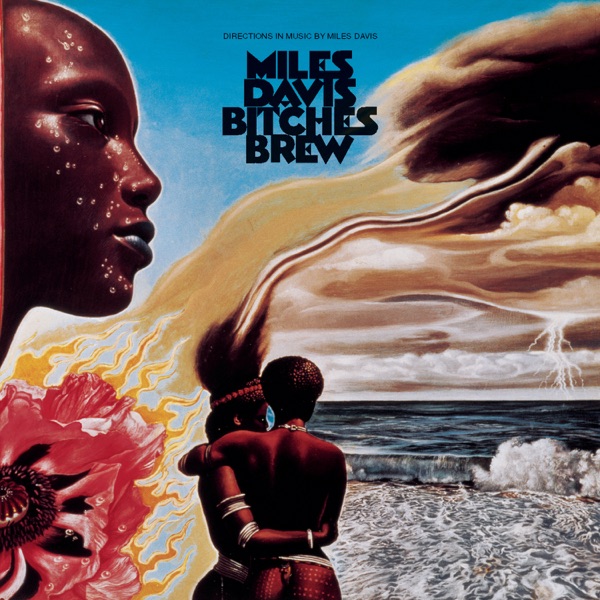
“Miles plugged jazz into electricity and the jazz purists never forgave him. A double album of controlled chaos that invented fusion, influenced Hendrix, and still sounds like the future. The Columbia pressing is dense and hypnotic.”
Miles Dewey Davis III (1926–1991) was an American jazz trumpeter and composer who fundamentally shaped modern jazz across five decades. Born in Alton, Illinois, he moved to New York in 1944 and quickly became a central figure in bebop before pioneering cool jazz in the late 1940s with collaborations like the "Birth of the Cool" sessions. Davis's career encompassed multiple revolutionary phases: modal jazz with "Kind of Blue" (1959), the Second Great Quintet's avant-garde explorations, and his groundbreaking fusion work beginning with "In a Silent Way" (1969) and "Bitches Brew" (1970). He collaborated with some of jazz's greatest musicians, including John Coltrane, Cannonball Adderley, Bill Evans, Wynton Kelly, and Weather Report members. His later work increasingly embraced electric instruments and rock influences, keeping him artistically vital until his death.
Style
Miles Davis's style evolved from bebop trumpet virtuosity to pioneering cool jazz, modal improvisation, and eventually electric fusion. His tone was distinctive—introspective and economical rather than virtuosic—and his ability to assemble visionary ensembles produced some of jazz's most influential recordings.
Significance
Miles Davis is among the most collected and essential jazz artists in the vinyl format, with multiple landmark albums considered foundational to any serious jazz collection. His frequent reissues and original pressings remain highly sought after by collectors for both sonic quality and historical importance.
Bitches Brew, recorded in August 1969, marked Miles Davis's definitive turn toward jazz fusion and electric instrumentation. Working with a rotating ensemble including Herbie Hancock, Chick Corea, Joe Zawinul, John McLaughlin, and Jack DeJohnette, Miles encouraged extensive improvisation and experimentation. The sessions were characterized by a spontaneous, jamming approach rather than composed arrangements—Miles would establish a direction or groove, and the musicians would explore it organically. Producer Teo Macero played a crucial role in shaping the final album through meticulous editing and sequencing of the extended takes. The result was two lengthy pieces, 'Bitches Brew' and 'Spanish Key,' that fused bebop sensibilities with rock and funk rhythms, electric keyboards, and wah-wah guitars, creating something entirely unprecedented in jazz.
Historical Context
Released in March 1970, Bitches Brew arrived at a pivotal moment when rock and pop audiences were increasingly open to complex, experimental music. The late 1960s had seen jazz losing commercial ground to rock, but Miles's bold fusion approach attracted younger listeners while maintaining critical credibility. The album became a massive commercial success, reaching the charts and eventually achieving platinum status—unprecedented for a jazz record. It influenced an entire generation of musicians and validated fusion as a legitimate genre. Critics were divided, with some embracing the innovation while jazz purists lamented the departure from acoustic tradition. Nonetheless, Bitches Brew became a gateway album, introducing countless listeners to jazz improvisation through a contemporary sonic framework.
Pressing Notes
The original 1970 Columbia pressing (CS 9995) featured gatefold artwork and remains highly collectible. Early pressings on 180-gram vinyl from the 1990s onward are readily available and sound excellent. The album has been reissued multiple times, including a 2013 MFSL 45 RPM audiophile edition praised for its clarity and dynamic range. Collectors should note that various CD reissues and modern vinyl pressings exist at different price points. Original first pressings in near-mint condition command premium prices, though later reissues capture the essential experience. The double album format of the 45 RPM pressing is particularly recommended for serious collectors seeking optimal sound quality, though standard 33 RPM pressings are more common and affordable.
Own this record? Track it in your collection.