#88 of 500
· Rolling Stone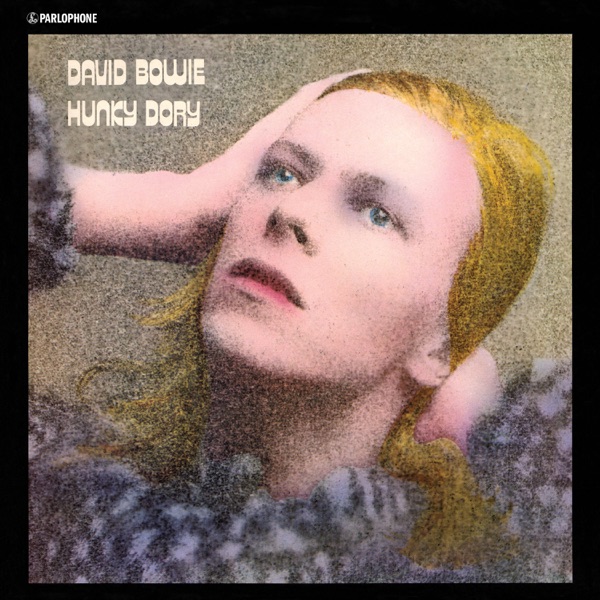
“The album before Ziggy, and arguably the better record. 'Life on Mars?' is the most dramatic three minutes in pop. 'Changes' is the manifesto. 'Queen Bitch' outswaggers the Velvet Underground.”
David Bowie (1947-2016) was a British rock musician whose career spanned five decades and fundamentally reshaped popular music. Beginning in the late 1960s, he achieved mainstream success with the 1969 single "Space Oddity" and subsequently created a series of conceptually ambitious albums that defined the 1970s. His most celebrated works include The Man Who Sold the World (1970), Hunky Dory (1971), The Rise and Fall of Ziggy Stardust and the Spiders from Mars (1972), Aladdin Sane (1973), and Young Americans (1975). Bowie's restless innovation continued through the Berlin Trilogy (Low, Heroes, Lodger) in the late 1970s, establishing him as an enduring influence across rock, electronic, and pop music. His final album Blackstar was released on his 69th birthday in January 2016, just two days before his death.
Style
Bowie's music synthesized art rock, glam rock, electronic, soul, and pop influences, characterized by theatrical presentation, innovative production, and constantly evolving sonic experimentation. His work ranged from orchestral arrangements and guitar-driven rock to electronic and dance influences, always pushing genre boundaries.
Significance
Bowie is one of the most collectible artists in vinyl culture, with his 1970s albums commanding significant collector interest and his original pressings fetching premium prices. His conceptual albums, striking visual presentation, and frequent format variations make him essential to serious vinyl collectors, while his influence on subsequent generations of artists remains immeasurable.
Hunky Dory, recorded in the latter half of 1971, represents a turning point in David Bowie's career as he transitioned from the theatrical rock of The Man Who Sold the World toward a more introspective, piano-driven sound. Working primarily at Trident Studios in London with producer Ken Scott, Bowie crafted an album that showcased his versatility across multiple genres—from the glam rock of 'Changes' to the folk-influenced 'Song for Bob Dylan' and the proto-synth pop of 'Queen Bitch.' The album featured contributions from guitarist Mick Ronson, whose string arrangements and solos would become essential to Bowie's sound, and was notable for Bowie playing a greater variety of instruments himself, including piano and synthesizer. The recording sessions were relatively relaxed compared to Bowie's later work, allowing for experimentation that would define the album's eclectic character.
Historical Context
Released in December 1971, Hunky Dory arrived during a period when progressive rock and glam were beginning to reshape popular music. While it didn't initially achieve massive commercial success, the album gained significant traction after Bowie's breakthrough with 'Starman' and The Rise and Fall of Ziggy Stardust and the Spiders from Mars in 1972. By then, Hunky Dory was reassessed as a masterpiece—sophisticated pop that anticipated the art-rock sensibilities of the decade. Critics have since ranked it among Bowie's finest works, praised for its songwriting depth, production quality, and the introduction of characters and themes that would dominate his 1970s output.
Pressing Notes
The original 1971 UK pressing on RCA (LSP 4623) featured the gatefold sleeve with the iconic portrait by Sukita and is highly sought by collectors. Early pressings vary in label design and matrix details. The album has been reissued multiple times, including a 1990 remaster and a 2015 deluxe edition. Collectors should note that original UK and US pressings have slight variations in artwork and running order. The 2015 reissue included both stereo and remastered versions. Condition is critical for original 1970s pressings; pristine copies command premium prices due to the album's increased recognition and collector demand.

For Your Pleasure
Roxy Music
Features the same art rock ambitions with lush instrumentation, theatrical vocals, and sophisticated songwriting that defined early '70s glam.

Transformer
Lou Reed
Explores gender fluidity and urban themes with art-rock sensibilities similar to Bowie's work, featuring memorable hooks and string arrangements.
Own this record? Track it in your collection.