#348 of 500
· Rolling Stone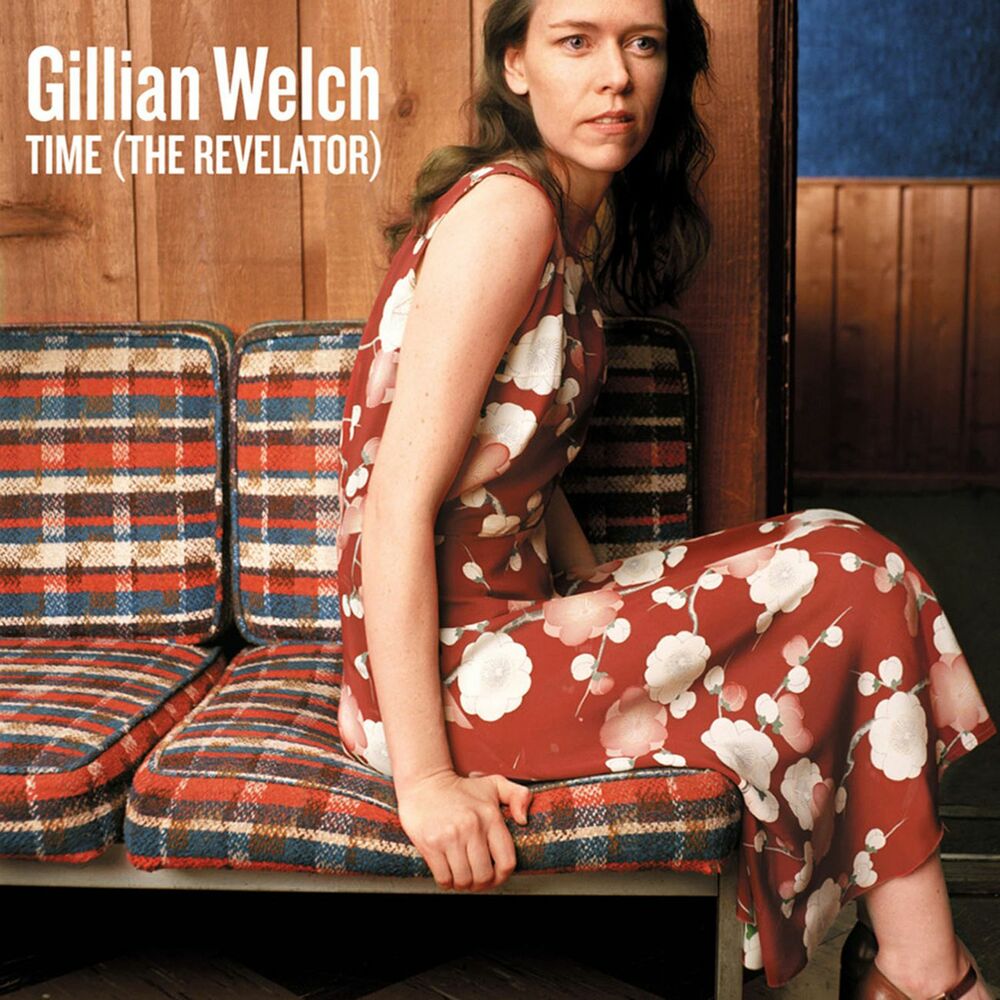
“Gillian Welch at #348 with Time (The Revelator) (2001). Past 300, every pick is an argument worth having. This is folk that doesn't just hold up — it still sounds essential. The Acony pressing belongs in any serious collection.”
Gillian Welch emerged in the late 1990s as a distinctive voice in Americana and alt-country music. Born in 1970 and raised in Los Angeles by folk-loving parents, she relocated to Nashville in the early 1990s where she developed her signature sound alongside collaborator David Rawlings. Her 1996 debut album 'Revival' showcased sparse arrangements and introspective songwriting that earned critical acclaim and established her reputation. Throughout the 2000s and 2010s, Welch released celebrated albums including 'Hell Among the Yearlings' (1998), 'Time (The Revelator)' (2001), and 'The Harrow & The Harvest' (2011), each demonstrating her evolution as a lyricist while maintaining her roots-oriented aesthetic. Her work exemplifies contemporary folk-country with timeless appeal.
Style
Welch's music blends traditional Americana, bluegrass, and alt-country with introspective storytelling and minimalist production. Her unmistakable alto voice, paired with sparse acoustic guitar and Rawlings' subtle arrangements, creates an intimate, timeless sound that echoes both Depression-era folk and contemporary indie sensibilities.
Significance
Gillian Welch has become essential for vinyl collectors interested in contemporary American roots music and alt-country. Her albums are prized for their superior sound quality on vinyl, and her influence on modern Americana and folk-revival movements makes her records valuable additions to any serious collection of 21st-century American music.
Time (The Revelator) represents Gillian Welch's most ambitious and musically expansive work, recorded over several years between 2000 and 2003. Working primarily with longtime collaborator David Rawlings, Welch crafted a double album that deepened her exploration of American roots music while expanding her sonic palette. The album features live instrumentation from a broader range of musicians than her previous work, including members of Nickel Creek and other roots players. Rawlings' production emphasizes organic, analog warmth—the songs were often recorded live with minimal overdubs, capturing the immediacy and emotional depth of the performances. The creative process was unhurried, with Welch writing and arranging songs across several years, allowing the material to develop naturally.
Historical Context
Released in 2001, Time (The Revelator) arrived during a folk and Americana revival period, though Welch's approach remained distinctly her own—more introspective and rooted in mortality and spiritual questioning than the contemporaneous neo-folk movement. The album received critical acclaim for its sophisticated songwriting and production, establishing Welch as a significant voice in American roots music. It earned Grammy nominations and solidified her reputation beyond the Americana niche, reaching discerning listeners across folk, country, and indie circles. The post-9/11 timing gave some of the album's meditations on faith and human fragility particular resonance.
Pressing Notes
The original issue was released on Acony Records as a double LP on 180-gram vinyl, which has become a collector's staple. Early pressings are highly regarded for their sound quality and attention to detail in packaging. The album has been reissued several times; later pressings maintain good quality but early editions are preferred by vinyl enthusiasts. The gatefold packaging features period photography and artwork reflecting Welch's aesthetic. Collectors should seek out first pressings for optimal sound, though the album's enduring popularity means copies remain relatively available in the secondary market. Some editions include different mastering, so comparing pressing notes is worthwhile for serious collectors.
Also Appears On
Own this record? Track it in your collection.