#210 of 500
· Rolling Stone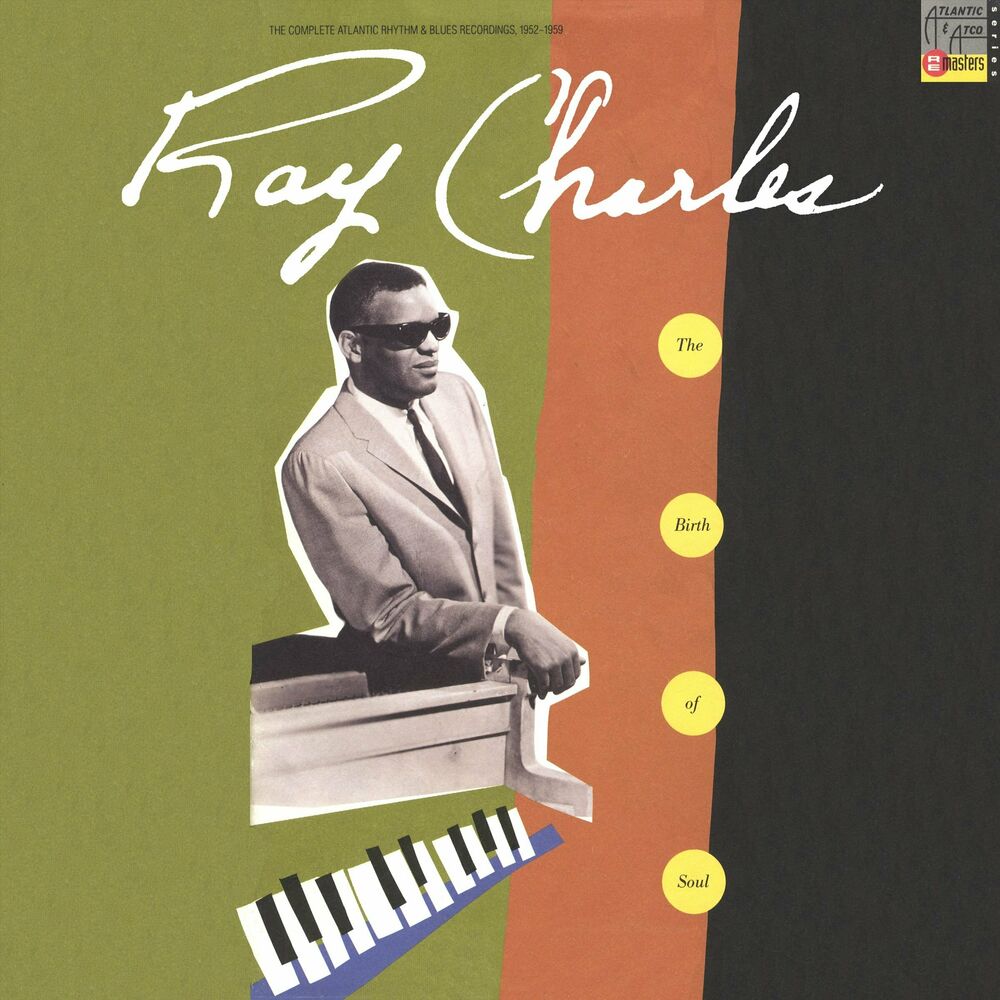
“This is the part of the list where the real crate-digging starts. Ray Charles brought everything to The Birth of Soul (1991) — the kind of record that reminds you why you started collecting vinyl in the first place. The original pressing does it justice.”
Ray Charles (1930-2004) was a pioneering musician who blended blues, jazz, gospel, and country into a distinctive sound that revolutionized popular music. Born Ray Charles Robinson in Albany, Georgia, he became blind by age seven but went on to develop one of the most influential careers in American music. His 1950s work at Atlantic Records produced classics like 'What'd I Say' (1954) and 'Georgia on My Mind' (1960), showcasing his innovative approach to rhythm and arrangement. In the 1960s, he expanded into country music with 'Modern Sounds in Country and Western Music' (1962), proving his versatility. Throughout his career, Charles won 17 Grammy Awards and became one of the first African American musicians to achieve mainstream success across multiple genres.
Style
Ray Charles synthesized soul, R&B, jazz, and gospel with a raw vocal intensity and sophisticated piano work. His style is characterized by emotional depth, complex arrangements, and genre-defying eclecticism that influenced generations of musicians.
Significance
Ray Charles fundamentally changed popular music by breaking down genre boundaries and proving that soul and artistry could transcend categorization. For vinyl collectors, his Atlantic Records catalog and later albums are essential, representing some of the finest vocal and instrumental recordings in American music history.
The Birth of Soul is a compilation album released in 1962 that showcases Ray Charles's evolutionary journey from jump blues and R&B into the sophisticated soul and jazz idiom that defined his artistic maturity. Rather than a traditional studio album of new recordings, it curated Charles's most significant recordings from 1949 to 1952, capturing his formative years at Atlantic Records before he achieved mainstream crossover success. These tracks document his transition from a pianist influenced by Nat King Cole toward the raw emotional intensity and innovative arrangements that would characterize his later triumphs. The album's title itself was somewhat retroactive branding—the term 'soul' was still crystallizing as a genre descriptor in the early 1960s—but it accurately reflected how these sessions demonstrated Charles's pioneering approach to blending blues feeling with sophisticated harmonic sensibility.
Historical Context
Released during the height of the early 1960s soul music boom, The Birth of Soul arrived as Ray Charles was already an established superstar following the massive success of 'Georgia on My Mind' and his country-pop crossover albums. The compilation served both archival and promotional purposes, introducing newer fans to his foundational work while the music industry was increasingly recognizing soul music as a distinct and commercially viable genre. This period saw growing appreciation for blues and R&B reissues, particularly as the civil rights movement made African American cultural history more visible. Critics praised the album as essential documentation of soul music's origins, establishing Charles as one of the genre's founding architects rather than merely a contemporary practitioner.
Pressing Notes
The original Atlantic Records pressing (SD 8052) featured typical early 1960s Atlantic mastering with relatively warm, compressed sound characteristic of the label's house style. Collectors should note that multiple reissues exist across different eras—Rhino Records and other labels have reissued this compilation variously, sometimes with alternate track selections. The original mono and stereo pressings differ slightly in their source material and mixing, with stereo versions being generally preferable to collectors for improved separation, though some tracks were originally recorded in mono. Early pressings can show wear, and finding clean copies is worthwhile given the historical significance. Japanese and European pressings from the 1970s-80s are often well-regarded for superior pressing quality and dynamics.
Own this record? Track it in your collection.