#105 of 500
· Rolling Stone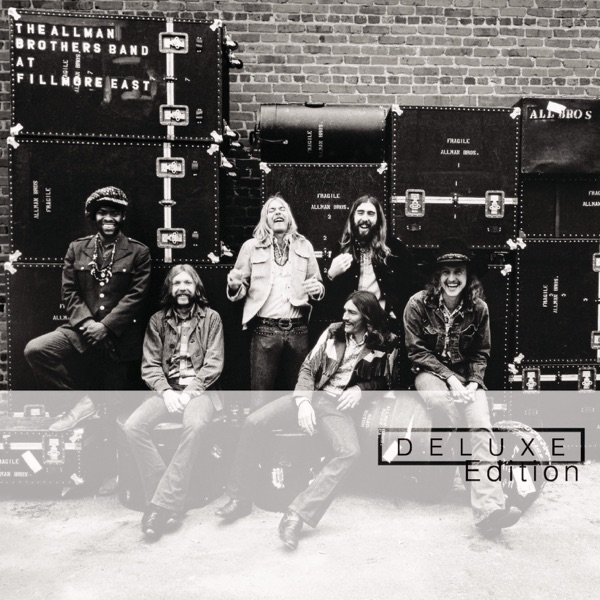
“Deep enough in the list to separate casual fans from serious collectors. The Allman Brothers's At Fillmore East (1971) is rock that transcends its genre tag. The original pressing is the one to find — the kind of record that stops you mid-flip at the store.”
The Allman Brothers Band emerged from Macon, Georgia in 1969, pioneering Southern rock and blues fusion that defined an era. Founded by visionary guitarist Duane Allman and his brother Gregg on keyboards, the band achieved commercial and critical success with their 1971 live double album 'At the Fillmore East,' which became a cornerstone of rock music. The group's innovative use of dual lead guitars and extended improvisations influenced countless musicians, though internal tensions and personal tragedies—including Duane's death in 1971—tested their longevity. Throughout the 1970s, despite lineup changes and setbacks, they continued releasing influential albums like 'Idlewild South' (1970) and 'Brothers and Sisters' (1973), blending blues, country, soul, and jam-oriented rock into a sophisticated yet accessible sound.
Style
Southern rock and blues fusion featuring dual lead guitars, extended improvisations, soulful vocals, and seamless integration of country and soul elements. Their sound balanced technical virtuosity with accessibility, creating music that was both radio-friendly and critically respected.
Significance
The Allman Brothers Band is essential to vinyl collectors for defining Southern rock and pioneering the jam band aesthetic that influenced generations of live performers. Their live albums, particularly 'At the Fillmore East,' remain benchmark recordings for analog warmth and performance capture on vinyl.
At Fillmore East captures The Allman Brothers Band at the peak of their creative power, recorded live at the legendary New York venue over two nights in March 1971. The band was riding high on the success of their self-titled debut and sophomore album Idlewild South, having developed an intensely telepathic live chemistry through relentless touring. Duane Allman's slide guitar interplay with Dickey Betts created a revolutionary dual-lead approach that defined their sound, while the rhythm section of Gregg Allman's organ, Berry Oakley's bass, and the dual drummers of Butch Trucks and Jai Johanny Johnson provided hypnotic grooves. The extended jam versions on this album—particularly the 23-minute "Whipping Post"—showcase the band's ability to build mountainous crescendos through improvisation, establishing them as masters of extended rock compositions.
Historical Context
Released in June 1971, At Fillmore East arrived during the height of the live rock album phenomenon, following successful releases from bands like Grateful Dead and Cream. The album became a watershed moment for Southern rock, legitimizing the genre beyond its regional roots and influencing countless bands. It peaked at No. 13 on the Billboard charts but gained legendary status through word-of-mouth and repeated listening—the album's improvisational passages rewarded close attention in ways studio recordings couldn't match. Tragically, the album's release preceded the 1971 deaths of both Duane Allman and Berry Oakley, lending the recording historical significance as a document of the band at full strength.
Pressing Notes
The original 1971 Capricorn Records pressing (SD 2-805) is a two-LP gatefold with exceptional dynamic range and warm sonics characteristic of early '70s analog recording. Early pressings featured a different mix than later reissues. Collectors should seek original pressings with the Capricorn logo and Atlantic distribution credit, as these tend to sound superior to later reissues. The album has been remastered multiple times—notably in 2003 for an expanded edition and again for various deluxe reissues. Vinyl enthusiasts prize original gatefolds for their photographs and liner notes, while audiophiles debate whether 180-gram reissues or original pressings offer better sound quality depending on condition.

Own this record? Track it in your collection.