#14 of 25
· Cratewise Editorial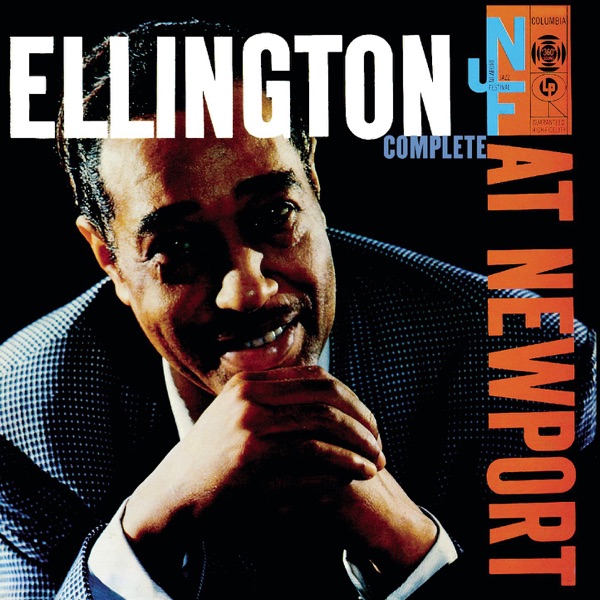
“Paul Gonsalves' 27-chorus tenor solo on 'Diminuendo and Crescendo in Blue' started a near-riot. The moment that proved the big band era wasn't dead.”
Duke Ellington (1899-1974) was an American composer, pianist, and bandleader who became one of the most important figures in jazz history. Born Edward Kennedy Ellington in Washington, D.C., he began his career in the 1920s and led his orchestra for nearly 50 years, establishing himself as a master of big band jazz and sophisticated composition. His tenure at the Cotton Club in Harlem during the late 1920s and early 1930s brought him national prominence, while his innovative arrangements and compositions revolutionized jazz orchestration. Ellington composed over 1,000 works, including the iconic standards "Take the A Train," "Mood Indigo," and "It Don't Mean a Thing (If It Ain't Got That Swing)." He recorded prolifically across multiple labels including RCA Victor, Columbia, and his own label, producing landmark albums such as *Such Sweet Thunder* (1957) and *Far East Suite* (1966). His late-career work remained creatively vital, and he continued performing until his death.
Style
Duke Ellington pioneered sophisticated big band jazz characterized by innovative orchestral arrangements, lush harmonic sophistication, and distinctive instrumental colors. His sound blended blues, classical elements, and swing, creating a refined yet deeply swinging aesthetic that transcended traditional jazz categories.
Significance
Ellington is essential to any serious jazz vinyl collection, representing the apex of big band composition and arrangement. His extensive discography and varied recording labels offer collectors numerous definitive interpretations of his works, making him fundamental to understanding jazz history on vinyl.
"Ellington at Newport" captures Duke Ellington's legendary performance at the 1956 Newport Jazz Festival, recorded live on July 7, 1956. This album showcases the Duke Ellington Orchestra at a pivotal moment, featuring extended versions of compositions that highlighted the band's virtuosity and improvisational prowess. The live setting energized the ensemble, with performances by key soloists including Johnny Hodges on alto saxophone, Harry Carney on baritone saxophone, and Paul Gonsalves, whose extended tenor saxophone solo on "Diminuendo and Crescendo in Blue" became one of jazz's most celebrated moments. The festival appearance was crucial for Ellington's career resurgence during the 1950s, reestablishing him as a vital force in modern jazz at a time when his popularity had waned.
Historical Context
By 1956, the Newport Jazz Festival had become the premier venue for American jazz, attracting top musicians and large audiences. Duke Ellington's performance was a watershed moment—his triumphant return to prominence after a period of relative obscurity. The live recording resonated with both critics and audiences, revitalizing interest in his work and leading to a productive final two decades of his career. The album demonstrated that swing-era jazz remained vital and sophisticated, competing effectively with bebop and cool jazz trends dominating the contemporary scene.
Pressing Notes
The original 1957 Columbia Records release came in both 10-inch and 12-inch LP formats. Early pressings are highly sought by collectors for their superior sound quality and original artwork. Various reissues exist from Columbia and later labels; the Mobile Fidelity Sound Lab audiophile pressing from 1992 is particularly prized. Collectors should verify pressing information via the matrix numbers on vinyl, as reissues vary significantly in fidelity. Original first pressings with deep grooves and virgin vinyl command premium prices.

A Love Supreme
John Coltrane
A landmark jazz album that shares Ellington's compositional depth and emotional intensity while representing the evolution of jazz beyond the big band format.

Mingus Ah Um
Charles Mingus
Features bold orchestral arrangements and compositional complexity reminiscent of Ellington's approach to large ensemble jazz.
Own this record? Track it in your collection.