#77 of 100
· Cratewise Editorial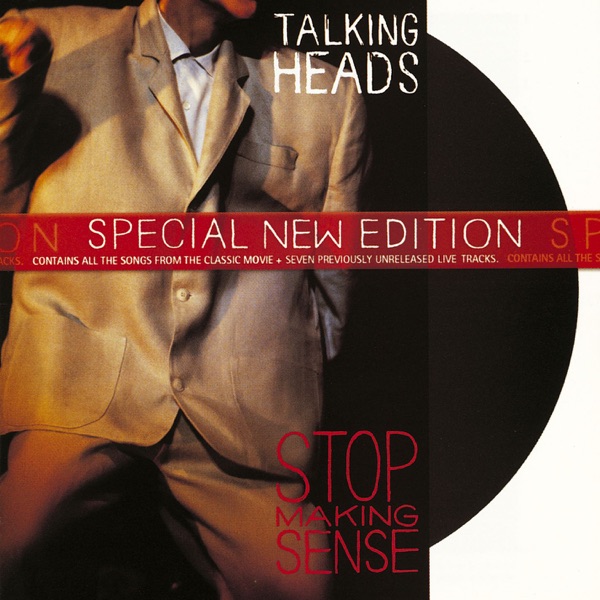
“Stop Making Sense lands here because it's the rare live album that rivals—maybe even surpasses—its studio counterparts. David Byrne and crew captured lightning in a bottle at Pantages Theatre, and the Sire pressing nails that electric energy from needle drop onward. This isn't nostalgia; it's a masterclass in performance that shaped how we think about concert documents. Side A alone justifies owning wax: the progression from sparse "Psycho Killer" to the full-band explosion is pure dopamine. Essential, but I'm placing it just outside my top tier because the studio albums still edge it out for pure songwriting.”
Talking Heads emerged from New York's downtown punk scene in 1975, founded by David Byrne (vocals, guitar), Chris Frantz (drums), and Tina Weymouth (bass). The band evolved from minimalist post-punk origins into innovators of art rock and world music fusion. Their collaborative partnership with producer Brian Eno from 1978-1988 yielded groundbreaking albums including 'More Songs About Buildings and Food' (1978), 'Fear of Music' (1979), and the landmark 'Remain in Light' (1980), which incorporated Afrobeat rhythms and polyrhythmic complexity. The group achieved mainstream success with 'Speaking in Tongues' (1983) and the live album 'Stop Making Sense' (1984), which documented Jonathan Demme's legendary concert film. The band disbanded in 1991, reunited briefly in 2002, and have continued sporadic performances and collaborations. Byrne's solo work and the members' diverse projects have maintained their influence on contemporary music.
Style
Talking Heads pioneered art rock and post-punk with angular guitar work, syncopated rhythms, and anxious vocal delivery, gradually incorporating funk grooves, world music elements, and electronic production into their sophisticated, danceable sound.
Significance
As key architects of the post-punk and new wave movements, Talking Heads' innovative albums are cornerstone acquisitions for vinyl collectors interested in 1980s art rock, world music fusion, and the intersection of punk ethos with intellectual songwriting and production experimentation.
Stop Making Sense emerged from Talking Heads' most creatively fertile period, recorded live at Hollywood's Pantages Theatre in December 1983 during their groundbreaking Speaking in Tongues tour. Unlike traditional concert albums, director Jonathan Demme captured the band performing songs from their entire catalog, showcasing their evolution from art-rock minimalists to funk-influenced experimentalists. The recording featured the full touring ensemble, including percussionist Steve Scales and horn players, allowing David Byrne, Tina Weymouth, Chris Frantz, and Jerry Harrison to deliver expansive arrangements. The album was mixed and produced by Talking Heads themselves along with engineer Ed Thacker, carefully crafting what would become the definitive live documentation of the band's creative peak.
Historical Context
Released in June 1984, Stop Making Sense arrived at a moment when post-punk had evolved into art-pop, and the album cemented Talking Heads' position as one of the decade's most innovative groups. The accompanying concert film, also released in 1984, became a landmark in music cinema, directed by Jonathan Demme with stylish black-and-white cinematography that perfectly captured the performance's artistic intensity. Both album and film received critical acclaim and reached mainstream audiences, helping the album achieve gold certification. The project demonstrated that Talking Heads could command massive stages while maintaining their intellectual rigor and experimental edge, influencing how bands approached live performance and documentation.
Pressing Notes
The original LP was released on Sire Records (1984) in both standard black vinyl and limited edition colored variants. The pressing quality was exceptional for its time, with dynamic sound reproduction that captured the live energy while maintaining clarity. Early pressings are highly sought by collectors. The album has been reissued multiple times, including deluxe editions with expanded liner notes. For vinyl enthusiasts, original first pressings from 1984 are preferred for their superior analog warmth. The album was later remastered and reissued on 180-gram vinyl by Rhino Records, offering improved fidelity for modern equipment. Original copies, particularly colored variants, command premium prices in the collector market.

Own this record? Track it in your collection.