#7 of 100
· Apple Music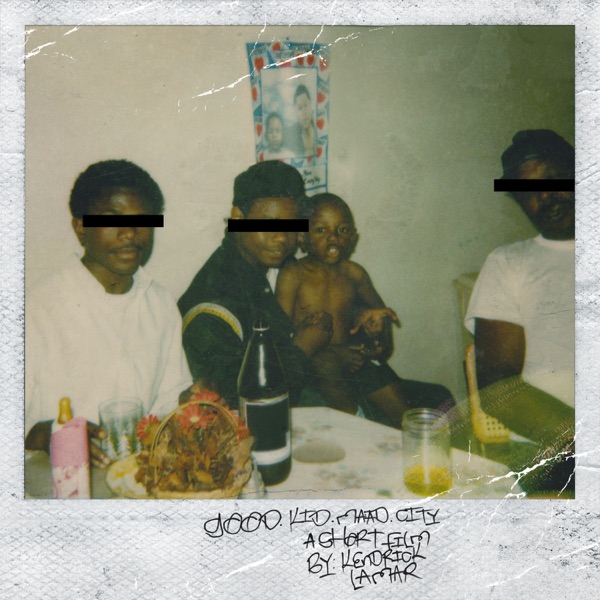
good kid, m.A.A.d city
Kendrick Lamar
Year
2012
Genre
Hip-Hop/RapLabel
Top Dawg/Interscope
Format
Vinyl LP
“Placing this at number seven feels right for an album that basically rewired what mainstream hip-hop could be narratively. Kendrick's storytelling across *good kid, m.A.A.d city* is cinematic in ways that still feel unmatched—the album functions almost like a concept record about Compton, with each track a scene. Every needle drop lands; "Swimming Pools (Drank)" and "Backseat Freestyle" became cultural touchstones, but it's the deeper cuts like "The Art of Peer Pressure" that show why this album demanded repeat listens. It's a debut that sounded fully formed, like Kendrick had been waiting his whole life to say what he needed to on wax.”
Kendrick Lamar Duckworth emerged from Compton, California in the early 2010s and became one of hip-hop's most critically acclaimed artists. His breakthrough came with the 2012 major-label debut 'good kid, m.A.A.d city,' a conceptual masterpiece that established him as a lyrical virtuoso and storyteller. He continued to elevate his artistry with 'To Pimp a Butterfly' (2015), a jazz and funk-influenced exploration of African-American identity, followed by 'DAMN.' (2017), which earned him a Pulitzer Prize for Music in 2018—the first non-classical/jazz artist to receive this honor. His fourth studio album 'Mr. Morale & The Big Steppers' (2022) showcased introspective production and thematic depth. Throughout his career, Kendrick has collaborated with top producers like DJ Dahl, Flying Lotus, and Alchemist, consistently pushing hip-hop's sonic and lyrical boundaries.
Style
Kendrick Lamar's style blends West Coast hip-hop with soul, jazz, funk, and experimental production, characterized by intricate wordplay, multi-layered narratives, and conceptual ambition. His production choices range from minimalist boom-bap to lush orchestral arrangements and unconventional sonic textures.
Significance
As a vital contemporary voice in hip-hop, Kendrick Lamar's albums—particularly his conceptual projects—have become essential vinyl acquisitions for serious collectors, representing some of the 2010s-2020s' most significant artistic achievements in recorded music and earning renewed interest in vinyl formats among younger audiences.
Good Kid, m.A.A.d City was recorded over an 18-month period primarily at studios in Los Angeles, with Kendrick Lamar working closely with producer Dâm-Funk, who became a central architect of the album's sonic identity. The project also featured collaborations with producers like DJ Dahi, T-Minus, and Scum, with notable guest appearances from Drake, Jcole, MC Eiht, and others. Kendrick crafted the album as a narrative journey through Compton, California, using his hometown as both literal setting and metaphorical landscape. The creative process involved meticulous attention to storytelling and character development, with Kendrick drawing from personal experiences and local culture to create an immersive, cinematic rap experience.
Historical Context
Released in October 2012, Good Kid, m.A.A.d City arrived during a pivotal moment when hip-hop was reassessing its artistic depth and lyricism. While trap and southern rap dominated commercial radio, the album offered an alternative vision—introspective, narratively complex West Coast rap that recalled the golden age of the genre. It received universal critical acclaim and significantly elevated Kendrick's profile from underground favorite to mainstream artist. The album resonated with listeners seeking substance in hip-hop and became a watershed moment for West Coast rap's artistic credibility, helping establish Kendrick as one of the generation's most important voices.
Pressing Notes
The original 2012 vinyl pressing was released by Aftermath Entertainment/Interscope Records on standard black vinyl. The album has since received multiple reissues and special editions, including colored vinyl variants pressed in subsequent years. Collectors should verify pressing plant details and matrix numbers, as some variations exist between different printings. The gatefold artwork features photography by photographer Dina Litovsky, and early pressings are generally preferred by collectors for sound quality. As one of the most sought-after modern hip-hop records, pricing has increased significantly since original release, with mint condition copies commanding premium prices in the collector market.

Also Appears On
Rolling Stone's 500 Greatest Albums of All Time
“A concept album about growing up in Compton that works as both autobiography and cinema. 'Sing About Me, I'm Dying of Thirst' is a twelve-minute masterpiece. Kendrick's Illmatic — the perfect debut from a generational talent.”
Essential Hip-Hop on Vinyl
“A concept album structured like a film, set in Compton. 'Swimming Pools' and 'Bitch, Don't Kill My Vibe' are the singles. 'Sing About Me, I'm Dying of Thirst' is the masterpiece.”
Own this record? Track it in your collection.