#8 of 25
· Cratewise Editorial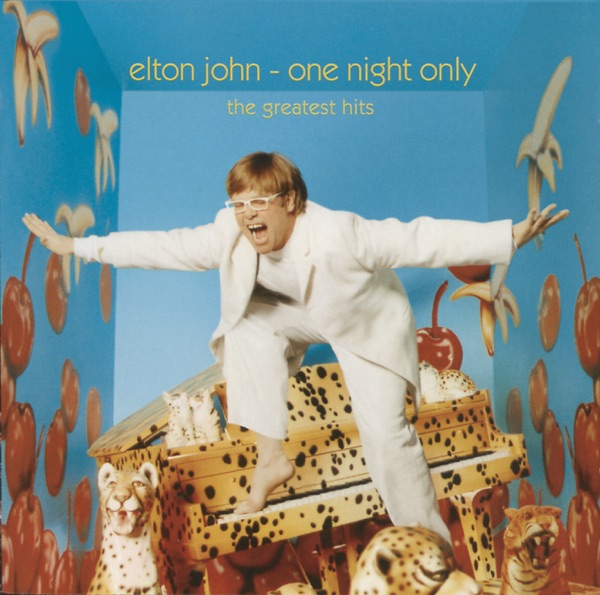
“'Your Song,' 'Rocket Man,' 'Crocodile Rock,' 'Daniel,' 'Bennie and the Jets.' Under $8 used. An absurd amount of talent for the price.”
Reginald Kenneth Dwight, known professionally as Elton John, emerged as one of the most commercially successful artists of the 1970s. Born in Pinner, England in 1947, he formed a songwriting partnership with lyricist Bernie Taupin that produced a string of platinum albums throughout the decade. His early albums "Elton John" (1970) and "Tumbleweed Connection" (1971) established his distinctive piano-driven rock sound, while "Goodbye Yellow Brick Road" (1973) became his magnum opus, featuring the iconic title track and "Candle in the Wind." The 1970s saw him release consistently acclaimed work including "Captain Fantastic and the Brown Dirt Cowboy" (1975) and "Blue Moves" (1976), showcasing his versatility across rock, pop, and ballad formats. His commercial peak continued into the 1980s with albums like "The One" (1992), though his influence extended well beyond that era.
Style
Elton John's work blends rock, pop, and soul with his signature piano arrangements as the centerpiece. His style ranges from introspective ballads and theatrical arrangements to uptempo rock numbers, characterized by his distinctive vocal delivery and elaborate orchestral production.
Significance
Elton John's extensive discography and multiple pressings make him a staple of vinyl collections, particularly his 1970s output on the Rocket and DJM Records labels. His albums are prized for their sonic quality and cultural impact, representing a crucial bridge between progressive rock and mainstream pop music.
Elton John's 'Greatest Hits' (1974) was compiled during the height of his commercial dominance, capturing the remarkable output of his first five years as a recording artist. Working with longtime lyricist Bernie Taupin, producer Gus Dudgeon, and his legendary band featuring guitarist Davey Johnstone and bassist Dee Murray, Elton had generated an extraordinary catalog of hits between 1969-1974. The album features remastered versions of songs recorded across multiple sessions, presenting a curated selection from his studio albums 'Elton John,' 'Tumbleweed Connection,' 'Madman Across the Water,' 'Goodbye Yellow Brick Road,' and 'Caribou.' Rather than newly recorded material, the compilation showcases the original studio versions, allowing listeners to appreciate the consistent quality and evolution of his songwriting partnership with Taupin and his growing studio mastery.
Historical Context
Released in May 1974, 'Greatest Hits' arrived when Elton John was arguably pop music's biggest star. The early 1970s had seen him transform from respected singer-songwriter into a global phenomenon, with 'Tiny Dancer,' 'Rocket Man,' and 'Goodbye Yellow Brick Road' becoming generational touchstones. The compilation was a commercial behemoth, reaching #1 in multiple countries and eventually becoming one of the best-selling albums ever. It cemented Elton's status as a major artist and demonstrated the universal appeal of his work during an era when rock, pop, and theatrical elements merged successfully. The album's success reflected changing music industry practices, as 'greatest hits' compilations became essential releases for major artists.
Pressing Notes
The original MCA Records pressing (in the US) and DJM Records (UK) editions are highly sought by collectors. Early pressings featured different mastering and matrix numbers worth documenting. Vinyl collectors should note that multiple reissues exist, including 1980s and 1990s reissues from various labels. The 2014 remaster on 180-gram vinyl by Mobile Fidelity Sound Lab is considered superior sonically by audiophiles. Original gatefold editions with the iconic cover design are preferred by collectors. Condition is crucial for first pressings, as this album was heavily played. Reissues typically vary in pressing quality; Japanese imports from the 1970s-80s are known for superior pressing quality compared to some Western reissues.

Songs in the Key of Life
Stevie Wonder
Epic piano-based rock and soul with sophisticated production and an artist known for theatrical, genre-blending arrangements.

Tapestry
Carole King
A masterwork of piano-led songwriting with intimate vocals and universal themes, representing the same singer-songwriter era at its peak.
Own this record? Track it in your collection.