#19 of 25
· Cratewise Editorial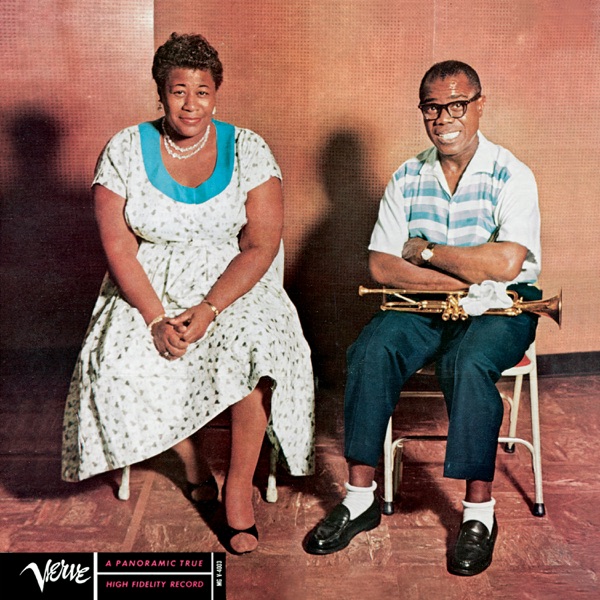
Ella and Louis
Ella Fitzgerald & Louis Armstrong
Year
1956
Genre
JazzLabel
Verve
Format
Vinyl LP
“Two of the greatest voices in American music, trading lines over Oscar Peterson's piano. Pure warmth. Play this while making eggs.”
Ella Fitzgerald and Louis Armstrong represent two of jazz's most celebrated vocalists, though they are typically remembered for their individual contributions rather than extensive collaborative work. Ella Fitzgerald (1917-1996), the "First Lady of Song," became famous in the 1930s for her pure tone, impeccable phrasing, and masterful scat singing. Her career spanned decades, with landmark recordings including her famous songbook series in the 1950s-60s, where she interpreted American standards with unmatched sophistication. Louis Armstrong (1901-1971), a New Orleans jazz pioneer, revolutionized both trumpet playing and vocal performance with his innovative technique and warm, gravelly voice. His recordings from the 1920s onward established him as a foundational figure in jazz history. While the two occasionally appeared together professionally, they maintained distinct careers as solo artists and bandleaders.
Style
Both artists pioneered different approaches to jazz vocals: Armstrong developed the virtuosic, conversational vocal style that influenced generations of singers, combining trumpet mastery with expressive singing, while Fitzgerald perfected a sophisticated, technically flawless approach grounded in jazz scat and interpretive nuance. Together, they represent the breadth of jazz vocal possibilities.
Significance
For vinyl collectors, both artists' extensive discographies are essential, with particularly collectible pressings including Armstrong's Hot Five and Hot Seven recordings, and Fitzgerald's songbook albums on Verve Records. Their work together, though limited, and their individual contributions document the evolution of jazz vocals from the 1920s through the 1960s.
Ella and Louis, released in 1956, captured two jazz legends at the height of their powers during casual yet focused studio sessions. The album was recorded over two sessions in Los Angeles, pairing Fitzgerald's unmatched scat singing and pristine technique with Armstrong's warm, gravelly vocals and spontaneous phrasing. Producer Norman Granz, who had signed both artists to his Verve Records label, assembled a stellar supporting cast including Oscar Peterson on piano, Herb Ellis on guitar, and Louis Brown on bass. The chemistry between Ella and Louis was immediate and genuine; their easy banter and mutual respect shone through in renditions of standards like "Cheek to Cheek" and "A Fine Romance." Rather than overproduction, Granz allowed the artists to lead naturally, resulting in intimate, conversational performances that showcased their complementary vocal styles.
Historical Context
Released in 1956, Ella and Louis arrived during a golden age of vocal jazz and the American songbook. Both artists were already icons—Armstrong was a jazz pioneer with decades of recorded history, while Fitzgerald had recently joined Verve Records and was entering a remarkably productive period. The album was enthusiastically received by critics and the public, becoming one of the most beloved jazz vocal recordings ever made. It demonstrated that jazz could be both commercially appealing and artistically sophisticated, helping to sustain interest in traditional jazz standards during an era when rock and roll was beginning to emerge.
Pressing Notes
The original 1956 Verve pressing (MG V-4003) is highly sought by collectors. Early pressings featured deep grooves and rich sound quality characteristic of Verve's attention to detail. The album was reissued multiple times on vinyl, including a 1961 stereo version and various reissues through the decades. Collectors should seek original mono pressings for their warmth and intimacy, though later stereo versions offer enhanced separation. All vinyl editions are worthwhile, as the recording quality holds up remarkably well. The album has also seen CD reissues with bonus tracks, but vinyl remains the preferred format for audiophiles appreciating the organic warmth of these vocal performances.
Also Appears On
Own this record? Track it in your collection.