#82 of 500
· Rolling Stone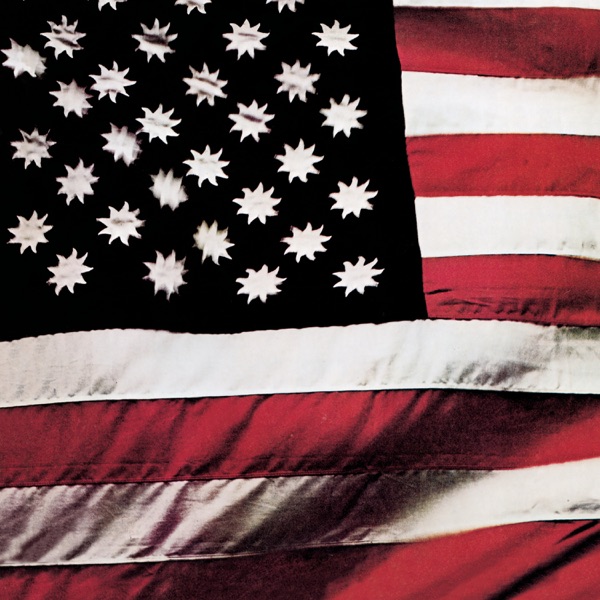
There’s a Riot Goin’ On
Sly and the Family Stone
Year
1971
Genre
FunkLabel
Epic
Format
Vinyl LP
“At #82, There’s a Riot Goin’ On represents Sly and the Family Stone at a creative peak (1971). The Epic pressing captures a moment in funk that's been influential ever since. Worth hunting in the bins.”
Sly and the Family Stone, led by Sylvester Stewart, emerged from the San Francisco Bay Area in the late 1960s as pioneers of funk and psychedelic soul. The group's innovative sound blended rock, soul, gospel, and funk into a revolutionary sonic tapestry that defined an era. Their landmark albums "There's a Riot Goin' On" (1971) and "Fresh" (1973) remain cornerstones of funk music, showcasing Sly's production genius and the band's tight ensemble playing. Despite commercial decline in the late 1970s and personal struggles, their influence on funk, hip-hop, and popular music remains incalculable, with countless producers and artists sampling and referencing their work.
Style
Sly and the Family Stone pioneered funk and psychedelic soul, characterized by infectious grooves, call-and-response vocals, integrated instrumentation across horns and keyboards, and socially conscious lyrics. Their sound seamlessly merged rock instrumentation with funky rhythms and soulful vocals.
Significance
The group's innovative production techniques, particularly evident on "There's a Riot Goin' On," established new standards for funk recording and remain essential references for vinyl collectors and music producers. Their multicultural, gender-integrated band lineup was groundbreaking for the era and their records are foundational to understanding the development of funk, soul, and contemporary popular music.
There's a Riot Goin' On, released in November 1971, marked a dramatic departure from Sly and the Family Stone's vibrant funk sound. Recorded primarily at Record Plant Studios in Sausalito and Los Angeles, the album was largely self-produced by Sly Stone himself, who played most of the instruments and sang most of the vocals. The recording sessions were sporadic and emotionally turbulent, reflecting Sly's personal struggles with substance abuse and the toll of constant touring. The album's darker tone emerged from this internal conflict, featuring heavily layered vocals, muted horn sections, and a grimmer worldview compared to their earlier optimistic hits. Despite the chaotic production process, the album showcased Sly's innovative studio craftsmanship, with intricate overdubbing creating a dense, psychedelic funk landscape.
Historical Context
The album arrived during a period of social unrest and disillusionment in America—hence its title's reference to inner-city riots. While Sly's previous albums like Fresh (1973) had celebrated unity and joy, this record reflected growing cynicism about social progress. It debuted at number one on the Billboard 200 and spawned the hit single 'Family Affair,' which reached number one on the pop charts. Critics were divided; some praised its experimental production, while others found it depressing compared to the band's earlier work. The album eventually became recognized as a landmark of 1970s funk and soul, influencing countless artists despite—or perhaps because of—its unconventional approach to commercial funk music.
Pressing Notes
The original 1971 pressing on Epic Records (EPC 64613 in the UK, KE 31099 in the US) is highly sought after by collectors. Early pressings featured the iconic cover image and are generally preferred for sound quality. The album was reissued multiple times throughout the 1970s and 1980s on Epic. Collectors should note that vinyl condition is crucial, as the album's dense production can reveal surface noise and pressing flaws more readily than lighter recordings. Original gatefold editions and inner sleeves are desirable. Reissues exist on various labels including recent audiophile vinyl reissues, though original Epic pressings remain the collector's preference for historical authenticity.
Own this record? Track it in your collection.