#327 of 500
· Rolling Stone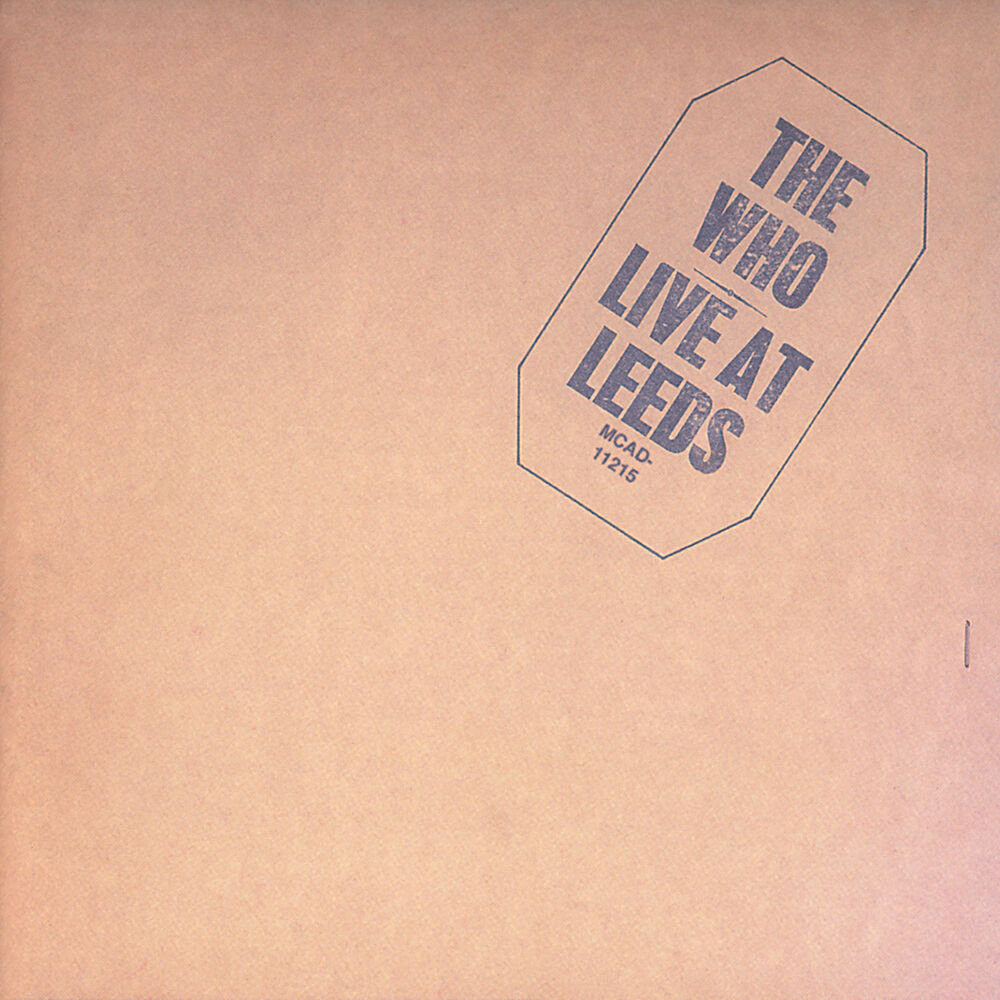
“There's a case that Live at Leeds deserves to be higher, but #327 is solid company. The Who's work here (1970) is the kind of thing that makes you play both sides twice. The original pressing is the way in.”
The Who emerged from London's mod scene in 1964, becoming one of rock's most innovative and influential bands. Led by Pete Townshend's songwriting and Roger Daltrey's powerful vocals, the band revolutionized rock music with the rock opera 'Tommy' (1969) and the ambitious double album 'Quadrophenia' (1973). Their early work combined aggressive power chords with smashed guitars and windmill arm movements, establishing their reputation as explosive live performers. Throughout the 1970s and beyond, they continued to produce critically acclaimed albums while maintaining legendary status as touring acts, influencing countless musicians across multiple generations.
Style
The Who pioneered power pop and hard rock with Pete Townshend's distinctive thick, crunching guitar sound and innovative use of synthesizers. Their music blends aggressive rock with intricate arrangements, memorable melodies, and Townshend's distinctive songwriting that ranges from rock anthems to introspective character studies.
Significance
The Who are essential to any serious rock vinyl collection, with 'Tommy' and 'Quadrophenia' considered landmark albums that expanded rock's artistic scope and commercial possibilities. Their original vinyl pressings, particularly early UK releases and the iconic 'Tommy' gatefold, remain highly sought after by collectors for both historical importance and sound quality.
Live at Leeds was recorded on May 14, 1970, at the University of Leeds Refectory in England during The Who's prime years as a live act. The band captured an explosive, nearly two-hour performance that showcased their raw power and tight musicianship. Pete Townshend's guitar work and the band's dynamic energy are on full display, with extended improvisations on songs like "My Generation" and "Summertime Blues." The album was released with minimal production, preserving the authentic concert sound that many fans considered superior to their studio counterparts. Producer Glyn Johns engineered the recording, capturing one of the band's most celebrated live performances that stands as a testament to their reputation as one of the greatest live rock bands of their era.
Historical Context
Released in May 1970, Live at Leeds arrived at a time when The Who were transitioning from their mod-era success toward more ambitious projects like Tommy. The early '70s saw a growing market for live rock albums as bands sought to capture the energy of their stage presence. The album was received as a masterpiece of live rock documentation and helped establish live albums as legitimate artistic statements rather than mere commercial stopgaps. It charted well and became a staple for rock fans, influencing how bands approached live recordings. The release also reflected the youth culture and counterculture movements of the time, positioning The Who as leaders in rock music's evolution.
Pressing Notes
The original UK pressing on Decca records is highly sought after by collectors, particularly early copies with the laminated gatefold sleeve and poster insert. Subsequent pressings vary significantly in sound quality, with many audiophiles preferring the original UK release. Various reissues have been released over decades, including both standard and deluxe editions. The album has appeared on 180-gram vinyl in recent years. Collectors should note that some copies included different packaging configurations, and the original gatefold design is considered essential to the complete collectible experience. Values for pristine original UK pressings remain strong in the collector market.
Own this record? Track it in your collection.