#296 of 500
· Rolling Stone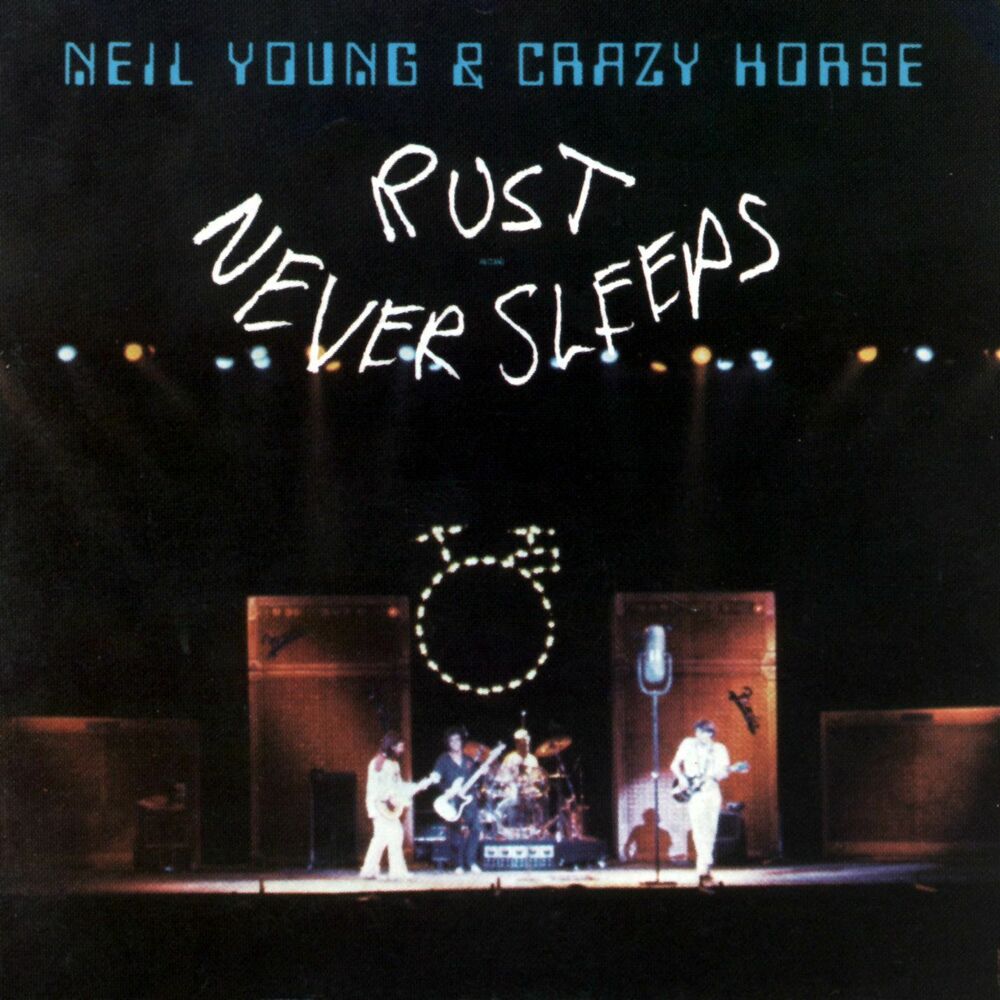
“#296 feels right for this one. Rust Never Sleeps is a product of the 1970s, and Neil Young delivered something that still resonates. The original pressing rewards close listening on a good turntable.”
Neil Young is a legendary Canadian singer-songwriter and guitarist born in 1945 who has maintained a prolific career spanning over five decades. Beginning in the late 1960s with Buffalo Springfield and Crazy Horse, Young established himself as a distinctive voice blending rock, country, and folk influences. His solo career, launched in 1969, produced iconic albums including 'Harvest' (1972), which became one of the best-selling records of all time, 'After the Gold Rush' (1970), and 'Rust Never Sleeps' (1979). Young is renowned for his uncompromising artistic vision, frequently shifting between intimate acoustic work and raw electric guitar-driven rock. His ability to capture authentic emotion and experimental production techniques has influenced generations of musicians across multiple genres.
Style
Neil Young's sound blends country-rock, folk, and hard rock with a distinctive high, wavering vocal delivery and expressive guitar work ranging from fingerpicked acoustic to searing electric leads. His music is characterized by poetic lyrics addressing social issues and personal themes, often with minimal production that emphasizes emotional directness.
Significance
Young is a cornerstone artist for vinyl collectors due to his commitment to analog recording and sound quality; he famously championed superior audio formats and recorded extensively on analog tape. His vast discography offers tremendous variety across pressings and editions, making him a central figure in serious record collecting communities.
Rust Never Sleeps, released in 1979, captures Neil Young's creative renaissance following a period of commercial uncertainty. The album was recorded live during Young's 1978 tour with Crazy Horse, with additional studio overdubs added afterward. The title references Young's philosophy that artistic progress requires constant creative activity—rust being a metaphor for stagnation. The album features some of Young's most enduring songs, including the acoustic opener "My My, Hey Hey (Out of the Blue)" and its electric counterpart "Hey Hey, My My (Into the Black)," which famously contains the line "It's better to burn out than to fade away." Young worked closely with producer David Briggs on the arrangements, blending raw live energy with studio polish. The album showcases Young's versatility, moving between intimate acoustic passages and explosive Crazy Horse electric performances.
Historical Context
Rust Never Sleeps arrived during the height of the punk rock movement, and Young's raw, unpolished approach resonated with both his longtime fans and younger listeners drawn to punk's ethos. The album's release marked a commercial and critical comeback, reaching number 8 on the Billboard charts and earning a Grammy nomination. It stood in stark contrast to the more polished production dominating mainstream rock in 1979, positioning Young as a bridge between classic rock and emerging alternative movements. The album's success demonstrated Young's enduring relevance and influenced the developing punk and new wave landscape.
Pressing Notes
The original 1979 Reprise Records pressing is highly sought by collectors. Early pressings feature specific matrix codes and label variations worth noting. The album has been reissued multiple times, including audiophile versions and remastered editions on 180-gram vinyl. The 2003 Mobile Fidelity Sound Lab pressing is particularly prized for its sound quality. Collectors should examine jacket condition and pressing plant information, as early pressings can command higher prices. The album's gatefold artwork and original inserts are important to condition-grading. Both stereo and mono pressings exist, with stereo being standard.

Own this record? Track it in your collection.