#7 of 25
· Cratewise Editorial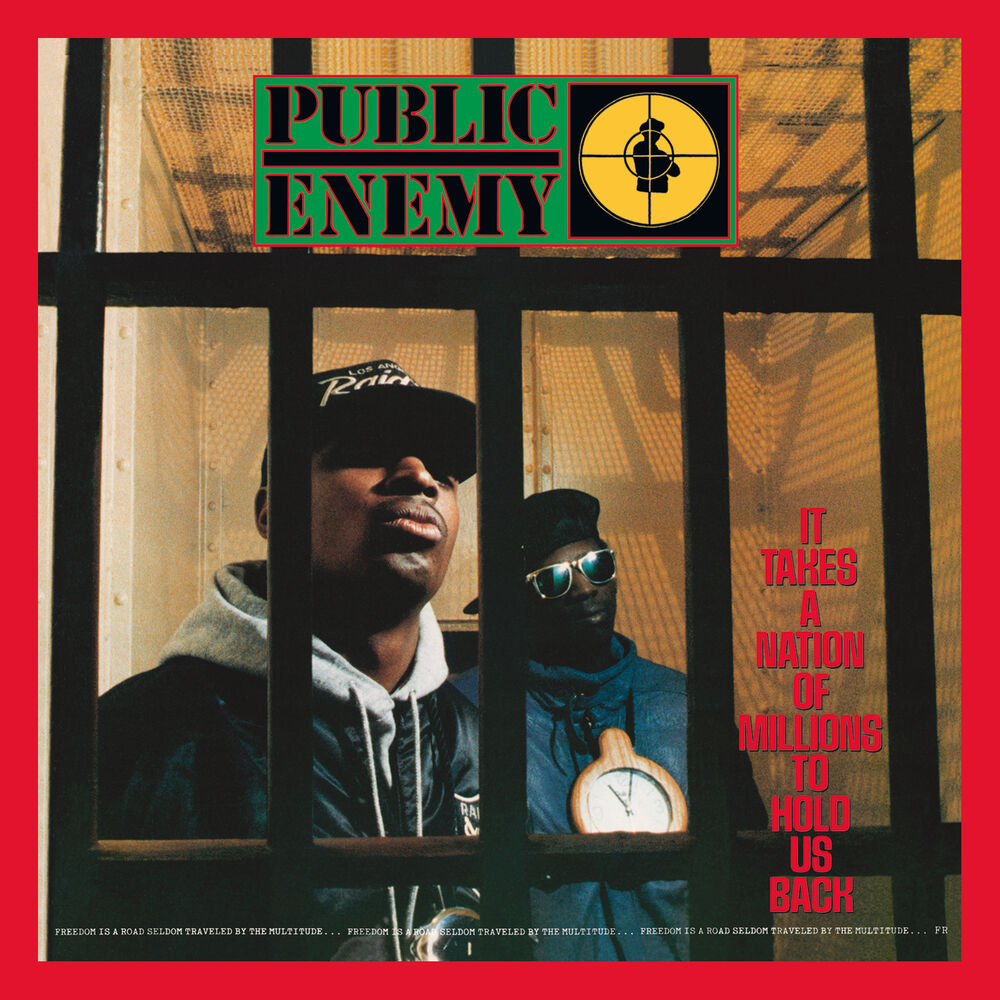
It Takes a Nation of Millions to Hold Us Back
Public Enemy
Year
1988
Genre
Hip-Hop/RapLabel
Def Jam
Format
Vinyl LP
“The Bomb Squad's production was a wall of noise, sirens, and chaos. Chuck D's voice cut through it like a fist. The most politically urgent album in hip-hop. Still sounds like a revolution.”
Public Enemy emerged from Queensbridge, Long Island in 1987, revolutionizing hip-hop with their aggressive, politically charged sound and confrontational lyrics. Founded by Chuck D and Flavor Flav, with production mastermind The Bomb Squad (particularly Hank Shocklee and Eric Sadler), the group released their landmark debut 'Yo! Bum Rush the Show' in 1987. Their follow-up albums 'It Takes a Nation of Millions to Hold Us Back' (1988) and 'Fear of a Black Planet' (1990) established them as the most influential hip-hop group of their era, combining dense, multi-layered production with urgent social commentary on racism, media manipulation, and systemic inequality. Throughout the 1990s and beyond, they maintained prolific output while navigating internal conflicts and cultural shifts, with Chuck D continuing to define their legacy as one of hip-hop's most uncompromising voices.
Style
Public Enemy pioneered the dense, sample-heavy production style of late-1980s hip-hop, layering multiple breakbeats, sirens, and fragmented vocal samples into chaotic yet meticulously structured soundscapes. Their style combined aggressive boom-bap beats with Chuck D's authoritative baritone delivery and Flavor Flav's comedic, high-pitched interjections, creating a sonic experience that was both musically innovative and politically urgent.
Significance
Public Enemy's albums are essential vinyl acquisitions for hip-hop collectors, particularly their late-1980s output, which fundamentally changed hip-hop production techniques and proved the genre could deliver potent social commentary. Their influence on alternative hip-hop, punk rock fusion, and politically conscious rap makes their vinyl releases historically and culturally significant.
Public Enemy's debut album, "It Takes a Nation of Millions to Hold Us Back," emerged from the Def Jam studios in 1988 as a revolutionary sonic manifesto. Producer Hank Shocklee and the Bomb Squad crafted dense, chaotic production textures layered with aggressive samples and sirens that became the album's signature sound. Chuck D's commanding vocals and Flavor Flav's antic personality provided the group's contrasting dynamic. The album was recorded during a period of intense creative energy at Def Jam, with the Bomb Squad's sampling technique—layering dozens of sources into cacophonous walls of sound—marking a departure from the cleaner production of rap's early years. Tracks like "Bring the Noise" and "Fight the Power" became anthems, while "Night of the Living Baseheads" and "Louder Than a Bomb" showcased the group's lyrically uncompromising approach to addressing systemic racism and social injustice.
Historical Context
Released in June 1988, the album arrived during a pivotal moment for hip-hop, when the genre was beginning to assert itself as a dominant cultural force while facing backlash from mainstream society. The album's militant Black nationalist rhetoric and aggressive aesthetics were controversial—some radio stations refused to play certain tracks. However, it resonated powerfully with African American youth and established Public Enemy as the voice of intelligent, politically conscious rap. The album reached #98 on the Billboard 200 (respectable for rap at the time) and achieved platinum status. Its release coincided with growing tensions around hip-hop's cultural impact and spawned ongoing debates about the relationship between rap and activism.
Pressing Notes
The original 1988 Def Jam Records pressing is highly sought after by collectors, particularly early runs. The album has been reissued multiple times on vinyl, including a 1998 remaster and various 25th and 30th anniversary editions. Collectors should note that early pressings contain the original unedited versions of tracks, while some later reissues include modifications. The gatefold cover art—featuring an X symbol and stark imagery—is integral to the album's collectibility. Vinyl enthusiasts should look for clean copies of the original pressing or authorized reissues from Def Jam, as bootlegs exist. The album's production, while intentionally 'dirty' sonically, translates effectively to vinyl's analog warmth.

Also Appears On
Rolling Stone's 500 Greatest Albums of All Time
“The Bomb Squad built a wall of sound from James Brown samples, sirens, and controlled chaos, and Chuck D delivered manifestos over the top of it. The original Def Jam pressing is a landmark in both hip-hop and vinyl production. This record sounds like a revolution, because it was one.”
Apple Music 100 Best Albums
“Solid placement for one of hip-hop's most seismic records. Hank Shocklee and the Bomb Squad's production on this album is an absolute masterclass in controlled chaos—those chopped-up horn stabs and dense sample collages should've been unlistenable, but instead they're hypnotic. Chuck D's delivery is ice-cold precision over some of the most aggressive sonic landscapes rap had ever heard. Number 34 feels right: it's undeniably essential, though some collectors would argue it deserves to sit even higher on any respectable all-time list.”
Own this record? Track it in your collection.