#5 of 25
· Cratewise Editorial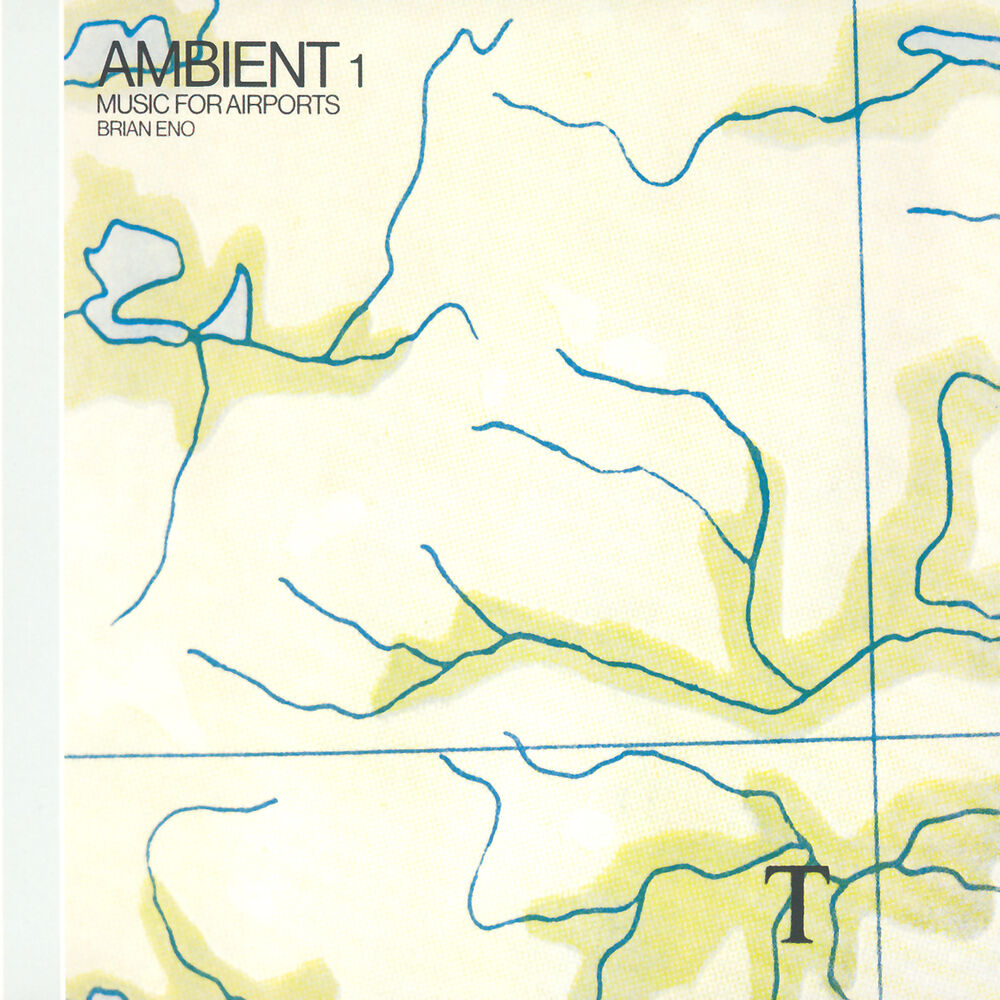
Ambient 1: Music for Airports
Brian Eno
Year
1978
Genre
ElectronicLabel
Polydor
Format
Vinyl LP
“Eno didn't just make an ambient album — he named the genre. Piano loops and tape delays creating a music designed to exist at the edge of perception. The original chill record.”
Brian Eno is a legendary English music producer, composer, and musician who fundamentally shaped modern music production and ambient music. Beginning his career as a keyboardist with Roxy Music in the early 1970s, Eno quickly distinguished himself with his innovative approach to synthesizers and studio techniques. After leaving the band in 1971, he launched a solo career that spanned experimental rock, electronic music, and ambient soundscapes. His groundbreaking albums like 'Another Green World' (1975) and the seminal ambient series beginning with 'Music for Airports' (1978) redefined what popular music could be. Beyond his own recordings, Eno became one of the most sought-after producers in the industry, crafting the sonic landscape for David Bowie's 'Berlin Trilogy,' U2's Joshua Tree era, and countless others. His philosophy of 'generative music' and 'ambient music designed to be as ignorable as it is interesting' influenced generations of musicians and producers.
Style
Eno's work encompasses experimental rock, synth-pop, ambient, and electronic music, characterized by innovative studio production, atmospheric textures, and unconventional compositional approaches. His sound is defined by meticulous attention to timbre, spatial effects, and the creative possibilities of the recording studio itself.
Significance
Brian Eno is essential to vinyl collectors as both a visionary artist and architect of the modern producer's role. His pioneering ambient albums and production techniques established new sonic territories while his work with major artists demonstrates the transformative power of production, making his records fundamental to understanding post-1970s popular music.
Released in 1978, 'Ambient 1: Music for Airports' marked Brian Eno's deliberate pivot toward creating 'ignorable' music designed to be played in public spaces. Eno recorded the album at his home studio in England, working alone with synthesizers, piano, and tape loops to craft four extended pieces that would later define the ambient genre. The album emerged from Eno's frustration with conventional background music and his desire to create something that would be both intrusive enough to listen to intently and subtle enough to recede into the environment. Each piece employs phasing, tape delay, and careful layering to produce a timeless, weightless quality. Eno's minimalist approach—stripped of traditional song structures—established a blueprint that would influence ambient and electronic music for decades.
Historical Context
The late 1970s saw increasing interest in electronic music and synthesizer technology, yet ambient music as a concept was largely undefined. Eno's album arrived alongside the rise of krautrock's influence on progressive music and during a period when many artists were exploring the intersection of art and commerce. Upon release on the ECM Records label (known for jazz), 'Ambient 1' received critical acclaim from forward-thinking musicians and critics, though it initially had limited commercial reach. The album's philosophical approach—positing music as environmental design rather than focused listening—was genuinely revolutionary and opened doors for electronic and experimental artists throughout the 1980s.
Pressing Notes
The original 1978 ECM pressing (ECM 1-1039) is highly sought by collectors, featuring gatefold artwork with Eno's iconic airport photograph by Peter Guyer. Early pressings were released on both vinyl and cassette. Various reissues exist, including a 2004 digital remaster, and the album has been pressed multiple times by ECM on 180-gram and standard vinyl. Collectors should seek original ECM pressings for sound quality and historical value, though later pressings remain sonically faithful. The album's cover art is integral to the listening experience—original pressings include detailed liner notes explaining Eno's ambient philosophy.
Own this record? Track it in your collection.