#16 of 100
· Cratewise Editorial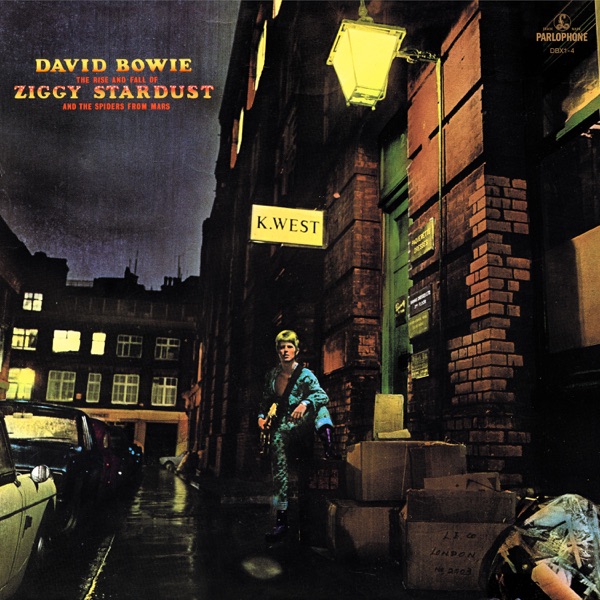
The Rise and Fall of Ziggy Stardust and the Spiders from Mars
David Bowie
Year
1972
Genre
RockLabel
RCA
Format
Vinyl LP
“Ziggy lands at sixteen because it's the perfect inflection point where rock became genuinely theatrical without losing its teeth. Mick Ronson's guitar work on "Suffragette City" and the title track is just ferocious—those first pressings capture a rawness that later reissues sanitized. It's not the most experimental Bowie record, but it's the one that actually changed the trajectory of rock music, and that cultural seismic shift belongs in the top twenty of any serious collection. The needle drop on side A is pure adrenaline.”
David Bowie (1947-2016) was a British rock musician whose career spanned five decades and fundamentally reshaped popular music. Beginning in the late 1960s, he achieved mainstream success with the 1969 single "Space Oddity" and subsequently created a series of conceptually ambitious albums that defined the 1970s. His most celebrated works include The Man Who Sold the World (1970), Hunky Dory (1971), The Rise and Fall of Ziggy Stardust and the Spiders from Mars (1972), Aladdin Sane (1973), and Young Americans (1975). Bowie's restless innovation continued through the Berlin Trilogy (Low, Heroes, Lodger) in the late 1970s, establishing him as an enduring influence across rock, electronic, and pop music. His final album Blackstar was released on his 69th birthday in January 2016, just two days before his death.
Style
Bowie's music synthesized art rock, glam rock, electronic, soul, and pop influences, characterized by theatrical presentation, innovative production, and constantly evolving sonic experimentation. His work ranged from orchestral arrangements and guitar-driven rock to electronic and dance influences, always pushing genre boundaries.
Significance
Bowie is one of the most collectible artists in vinyl culture, with his 1970s albums commanding significant collector interest and his original pressings fetching premium prices. His conceptual albums, striking visual presentation, and frequent format variations make him essential to serious vinyl collectors, while his influence on subsequent generations of artists remains immeasurable.
David Bowie recorded 'The Rise and Fall of Ziggy Stardust and the Spiders from Mars' at Trident Studios in London during late 1971, with producer Ken Scott and engineer Roy Thomas Baker. The album marked Bowie's creative breakthrough, introducing the androgynous alien rock star character Ziggy Stardust—a concept that synthesized Bowie's theatrical ambitions with hard rock sensibilities. Working with his newly formed backing band, the Spiders from Mars (featuring Mick Ronson on guitar), Bowie crafted a cohesive narrative album about an extraterrestrial messenger warning of Earth's impending doom. The record blended glam rock, hard rock, and pop sensibilities, with Ronson's guitar work proving crucial to the album's sonic identity. Bowie's androgynous presentation and the album's theatrical concept pushed rock music into unexplored artistic territory.
Historical Context
Released in June 1972, 'Ziggy Stardust' arrived during a pivotal moment in rock music when glam rock was emerging as a significant force. The album initially received mixed commercial reception but gradually became a cultural phenomenon, particularly after Bowie's iconic appearance on 'Top of the Pops' in July 1972. The album's embrace of androgyny and science fiction themes resonated with audiences seeking artistic innovation beyond traditional rock conventions. By 1973, it had become a massive commercial and critical success, eventually selling millions of copies and establishing Bowie as a major artistic force. The album's influence on subsequent rock, punk, and alternative music proved immeasurable.
Pressing Notes
The original 1972 UK pressing on RCA (with the 'thumbnail' sleeve design by George Underwood) is highly sought by collectors. Early pressings featured a fold-out poster and the distinctive cover art. The album has been reissued numerous times, including the 1990 Rykodisc remaster and the 2012 remaster released by Columbia/Legacy. Collectors should note that original UK pressings can command significant prices, particularly in excellent condition. The 2012 deluxe edition includes remastered audio and bonus material. Mint condition original UK first pressings remain among the most valuable Bowie vinyl, with variations in sleeve design and pressing quality affecting collector value.

Transformer
Lou Reed
Features the same glam rock aesthetic and theatrical rock sensibility with provocative lyrics and innovative production from the early 1970s.

For Your Pleasure
Roxy Music
Shares the glam rock sophistication and art-school approach to rock music with equally ambitious arrangements and visual presentation concepts.

Electric Warrior
T. Rex
A quintessential glam rock album with catchy hooks, androgynous presentation, and the same era's energetic take on rock stardom and persona.
Also Appears On
Essential Classic Rock on Vinyl
“Bowie invented a character, told his story, killed him off. Mick Ronson's guitar is criminally underrated. 'Starman' still sounds like first contact.”
Apple Music 100 Best Albums
“Ziggy at number 24 feels slightly conservative for an album that fundamentally rewired rock music, but Apple's playing it safe with their placement. This is the needle drop that changed everything—the production clarity on Mick Ronson's guitar work, the theatrical ambition, the perfect sequencing from "Five Years" through "Rock and Roll Suicide." What's remarkable is how the album works equally well as concept and collection of pure songs. The RCA pressing from '72 captures this magic in ways later reissues struggle to match, and it deserves to sit higher on any credible list of rock essentials.”
Rolling Stone's 500 Greatest Albums of All Time
“Bowie killed off his greatest character after just one album and a tour, and that's the most Bowie thing possible. 'Starman' is the invitation, 'Suffragette City' is the party, and 'Rock 'n' Roll Suicide' is the goodbye. Glam rock's masterpiece.”
Own this record? Track it in your collection.